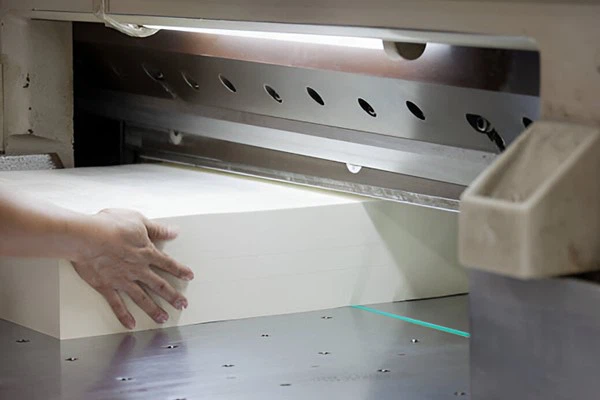
For high-speed paper cutters, blade material directly affects production efficiency and operating costs. How to choose between an alloy blade (tungsten carbide) and a high-speed steel (HSS) blade is a decision that every procurement manager and equipment engineer needs to face. As a manufacturer with decades of experience producing precision mechanical blades, Sureay provides this comprehensive analysis.
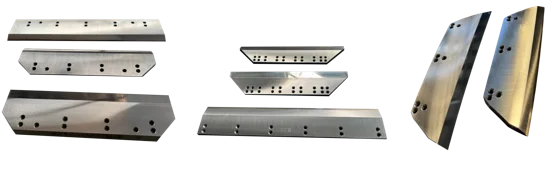
1. Material Characteristics
Alloy blades are made from tungsten carbide as the base material, achieving a hardness of HRC 89–3 with extremely high wear resistance. The trade-off is brittleness — tungsten carbide is sensitive to impact loads. High-speed steel blades reach HRC 62–5; wear resistance is lower, but toughness is significantly better and they can absorb impact loads that would chip a carbide edge.
Technical Note
HARDNESS COMPARISON — Alloy (Tungsten Carbide): HRC 89–3, extremely high wear resistance, brittle under impact. HSS: HRC 62–5, good wear resistance, high impact toughness, suitable for shock loads.
2. Service Life Comparison
In high-speed paper cutting applications, the lifespan of alloy blades is 5–0 times that of high-speed steel blades.
High-speed steel blade: Under normal operating conditions, cutting mileage is approximately 10,000–0,000 metres. In the packaging industry, published service life benchmarks reach approximately 200,000 metres. HSS remains the most widely used solution in most packaging factories due to its lower initial cost and ease of regrinding.
Alloy (carbide) blade: Cutting mileage can reach 50,000–00,000 metres. The service life of premium-grade alloy blades reaches 4+ million metres in optimised conditions. Strong wear resistance and sustained edge retention significantly reduce blade-change stoppages and improve overall equipment effectiveness.
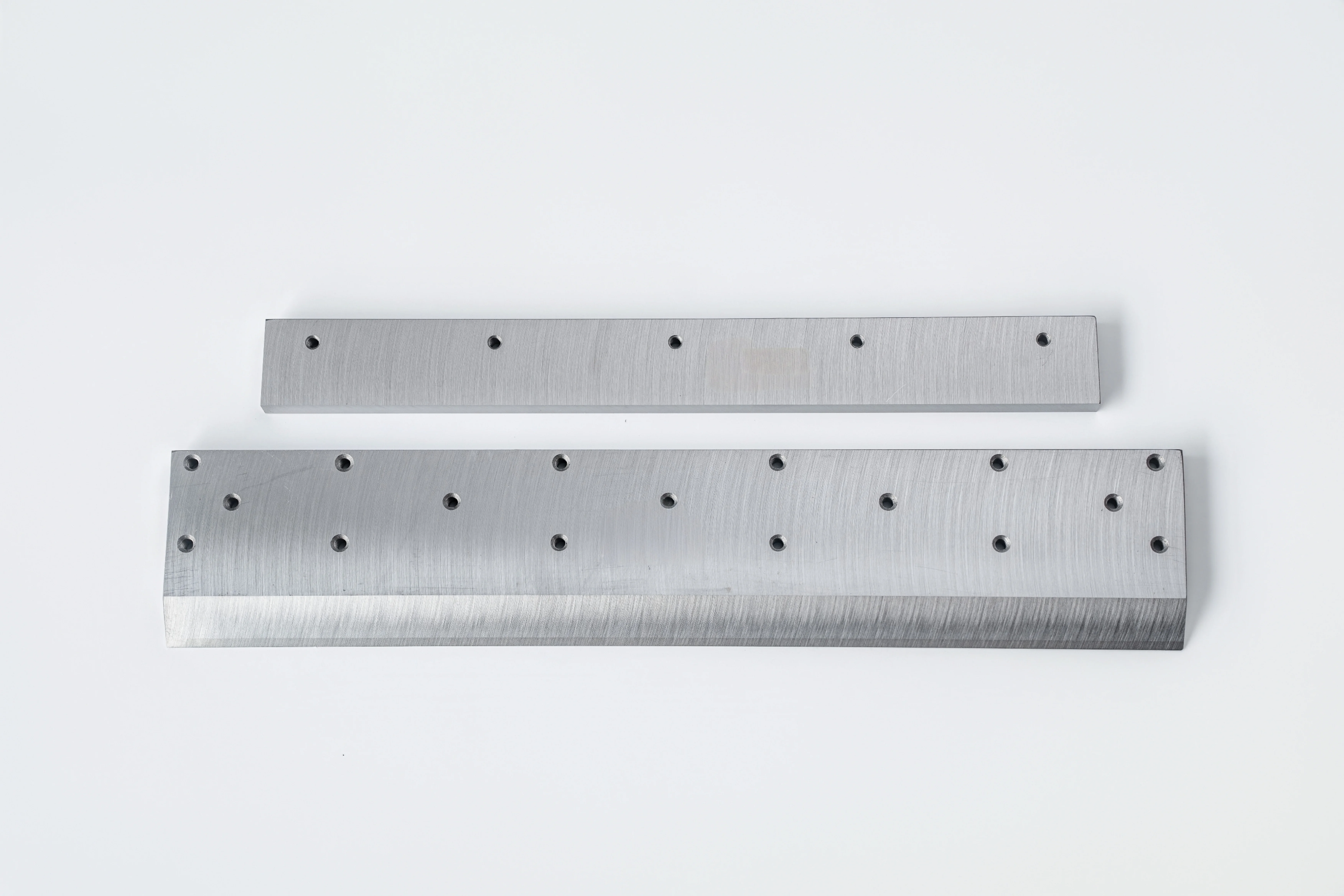
3. Cost Comparison
The unit price of alloy blades is approximately 10 times that of high-speed steel blades — the primary reason many buyers hesitate. However, total cost of ownership tells a different story.
Technical Note
TOTAL COST BREAKDOWN — Single purchase cost: Alloy blade HIGH (~10× HSS) | HSS blade LOW. Replacement & regrind frequency: Alloy LOW | HSS HIGH. Downtime loss: Alloy LOW | HSS HIGH. Long-term comprehensive cost: Alloy LOWER | HSS HIGHER.
For high-speed paper cutters running continuous production with full order books, the value generated by the downtime saved by alloy blades can easily cover the initial price difference. In the long run, alloy blades are often the more economical choice.
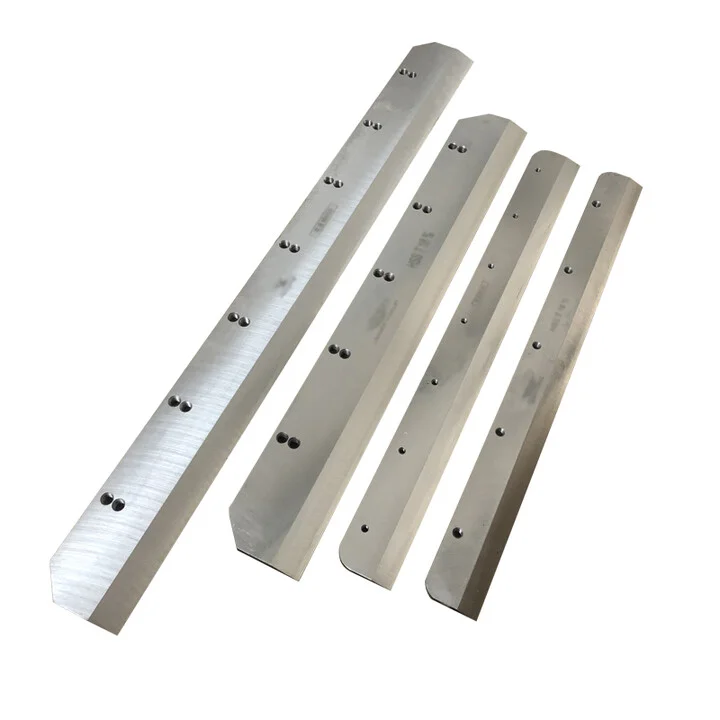
4. How to Choose the Right Blade
24-hour continuous production — Alloy blade. Long service life, minimal blade changes, low downtime losses, and the lowest overall cost per metre cut.
Small batch sizes or multiple substrate varieties — High-speed steel blade. Low initial investment, simpler regrinding workflow, and high operational flexibility.
Cutting high-ash-content paper, art paper, or corrugated board — Alloy blade. Abrasive substrates accelerate HSS edge passivation quickly; carbide wear resistance is essential to maintain cut quality.
Older equipment with insufficient precision — High-speed steel blade. Carbide is brittle; edge chipping is likely if machine alignment or clamping precision is below standard. HSS toughness provides greater tolerance for equipment variability.
Technical Note
SELECTION PRINCIPLE: If your paper cutter is high-precision and running at full capacity, alloy blades are the wiser long-term investment. For older equipment or variable operating conditions, high-speed steel offers greater safety margin and lower risk.
5. Summary
Alloy blade: High hardness, extreme wear resistance, long service life — suited to continuous production and demanding substrates. Initial investment is high, but long-term comprehensive cost is lower.
High-speed steel blade: Affordable, good toughness, can be repeatedly reground — suited to small batches or equipment with average precision. Replacement frequency is higher, and long-term comprehensive cost exceeds that of carbide over the same cutting volume.
The right selection depends on your equipment condition, production scale, and substrate. For professional material selection advice or a custom blade solution for your paper cutter, contact the Sureay engineering team — we supply both paper cutting blades in HSS and carbide grades, with CMM dimensional reports in every shipment.