The Geometry-Performance Trade-off
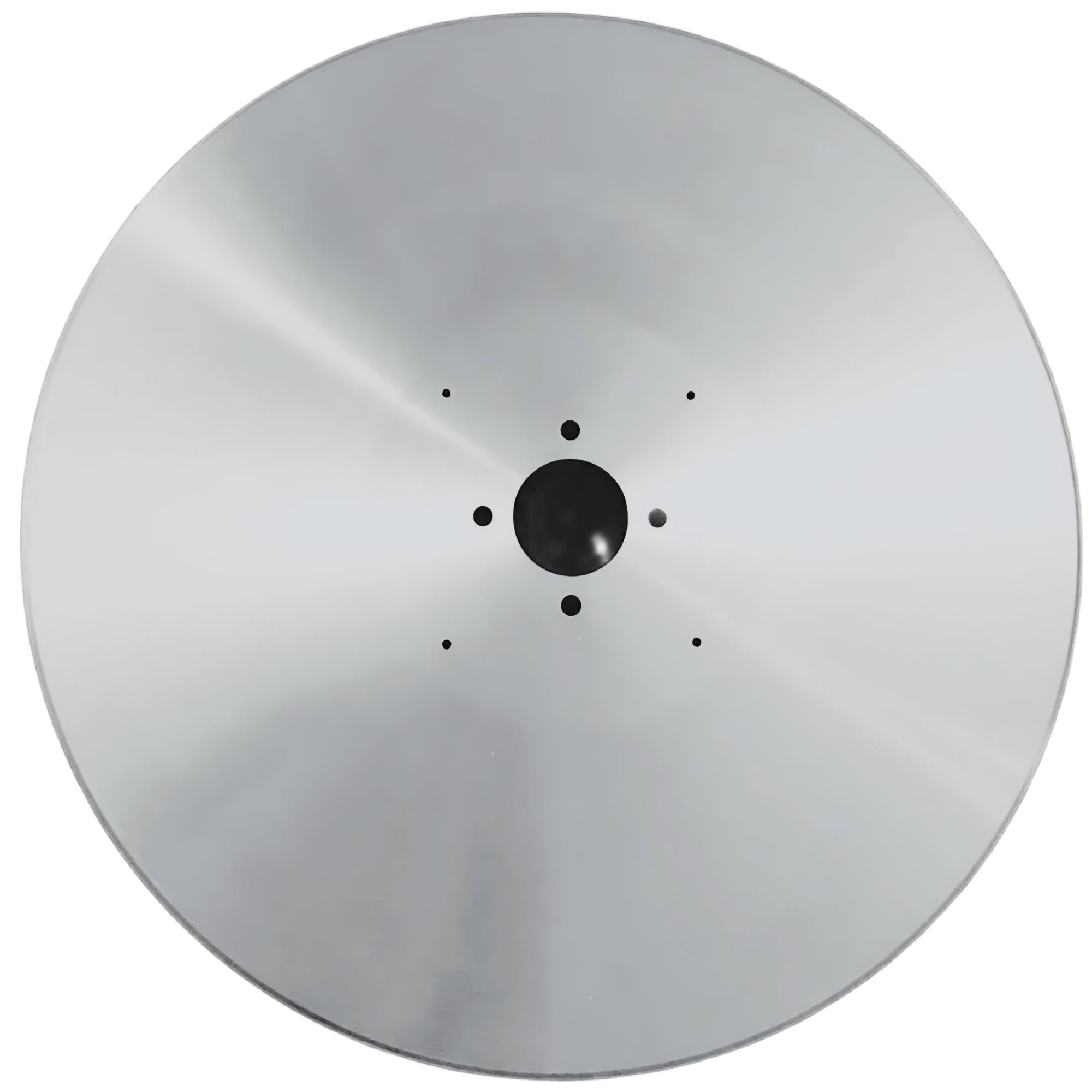
Log saw blade geometry is governed by three competing demands: edge sharpness (low included angle), deflection resistance (blade section thickness and crown profile), and tooth durability (sufficient included angle to resist chipping under cyclic impact from log cores and wrappers). Industry standard bevel angles range from 28° to 42° depending on log diameter, rotation speed, and cellulose density.
Technical Note
GUIDELINE: For tissue logs ≥80 mm diameter at speeds above 2,500 RPM, a 32° included angle with 0.15 mm secondary bevel is the recommended starting specification. Increase to 36° for logs containing recycled fibre content >30%.
Crown Profile and Deflection
Blade deflection mid-cut introduces skew error in slice dimension tolerance and generates lateral loading that accelerates bearing wear in the saw spindle. The crown profile (radial relief from centre to tooth) must be within ±0.03 mm of nominal across the full blade diameter. Crown verification is performed on our Vollmer VGrind optical measurement station post-grind.