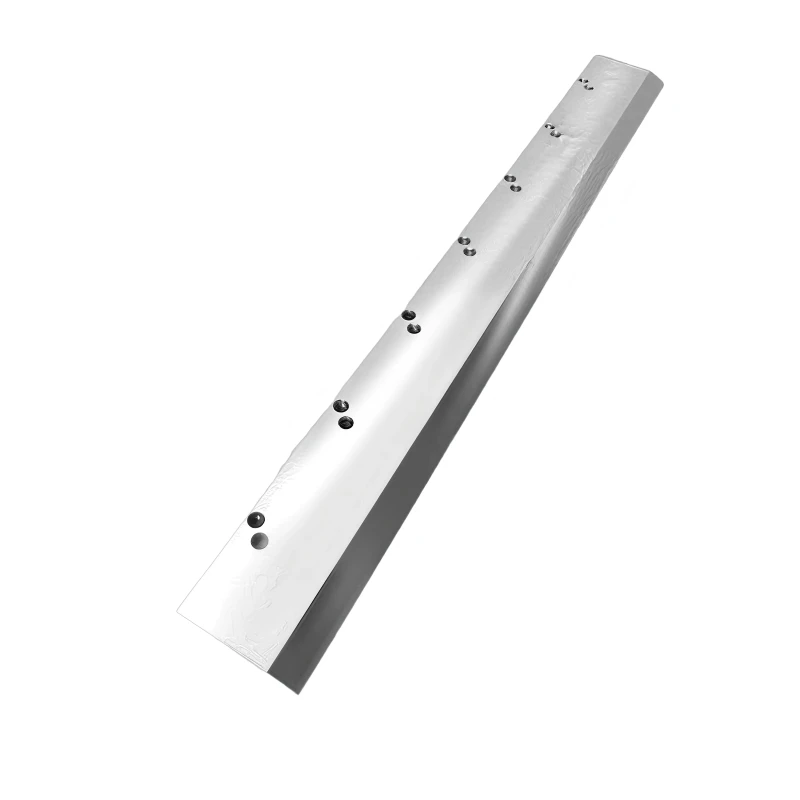
Paper Cutter Blades & Paper Guillotine Knives
- ■Sizes: 450–2050 mm
- ■Material: 18% tungsten HSS inlay or tungsten carbide-tipped (TCT)
- ■Application: Stack cutting of paper and board
Technical Specifications
- Sizes: 450–2050 mm
- Material: 18% tungsten HSS inlay or tungsten carbide-tipped (TCT)
- Hardness: HSS: 62–64 HRC; carbide: 89–91 HRA
- Blade construction: Bimetallic: cutting-edge inlay brazed to an alloy-steel body
- Bevel angle: 21°–24°; double-bevel configurations available
- Application: Paper stacks, coated art paper, recycled board and carbonless copy paper
- Face Flatness: ≤0.05 mm
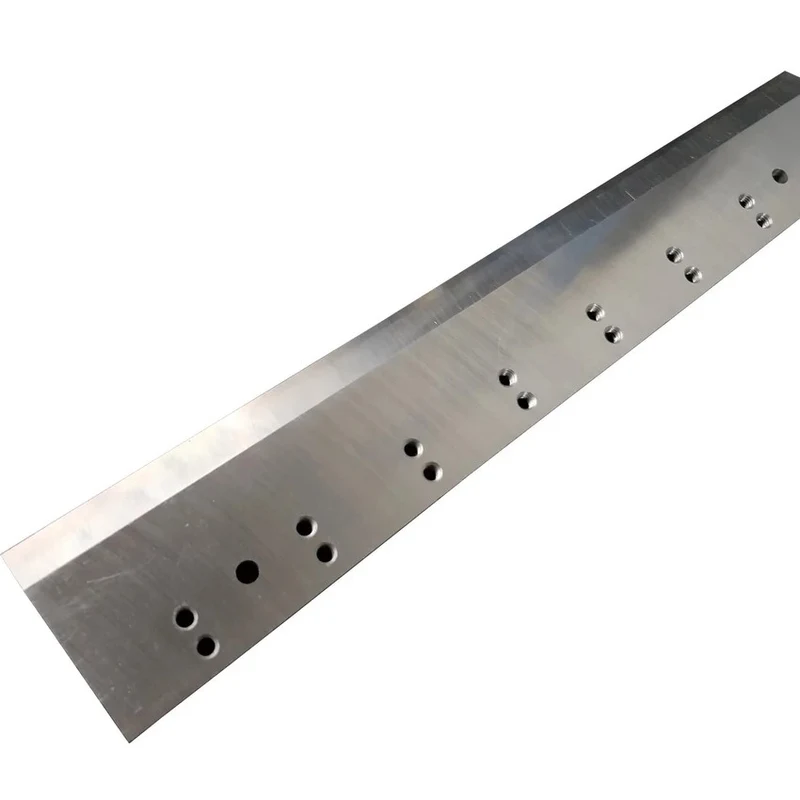
Common Standard Dimensions
Listed knife dimensions are catalog configurations, not machine cutting widths. Confirm the mounting pattern and show the edge and body thickness on a cross-section drawing.
| Item No. | Length (mm) | Width (mm) | Edge thickness (mm) | Body thickness (mm) |
|---|---|---|---|---|
| SR003101 | 450 | 51 | 12 | 10 |
| SR003102 | 595 | 55 | 13.5 | 10 |
| SR003103 | 795 | 60 | 13.5 | 10 |
| SR003104 | 895 | 60 | 13.5 | 10 |
| SR003105 | 995 | 60 | 14 | 11 |
| SR003106 | 1095 | 65 | 14 | 11 |
| SR003107 | 1350 | 80 | 16 | 13 |
| SR003108 | 2050 | 85 | 16 | 14 |
Request a quote for your knife configuration
Include the cutter model, knife drawing or part number, stack material and height, and mounting-hole pitch.
Compatible Machine Brands
Sureay manufactures HSS-inlaid and carbide-tipped paper guillotine knives, with custom lengths, mounting patterns and bevel profiles for your cutter. Share your drawing or sample to receive a quotation for the blade configuration and material you need. Machine brands are compatibility references for Sureay aftermarket parts.
Engineering Advantages
HSS Inlay and Carbide-Tipped Cutting Edges
Sureay offers 18% tungsten HSS inlay and tungsten carbide-tipped edges on steel bodies, giving stack cutters a choice of knife constructions for their paper stock and production duty.
Ground Faces and Specified Bevel Profiles
Paper cutter knives are available with ground faces and drawing-defined bevels, including double-bevel configurations, so the working geometry can be specified alongside the cutting-edge material.
Custom Lengths and Mounting Patterns
Listed paper guillotine knives span 450–2050 mm in length. Sureay also makes replacement knife bodies, bevels and mounting patterns to the drawing for your existing cutting beam.
Related Blades & Parts
View All →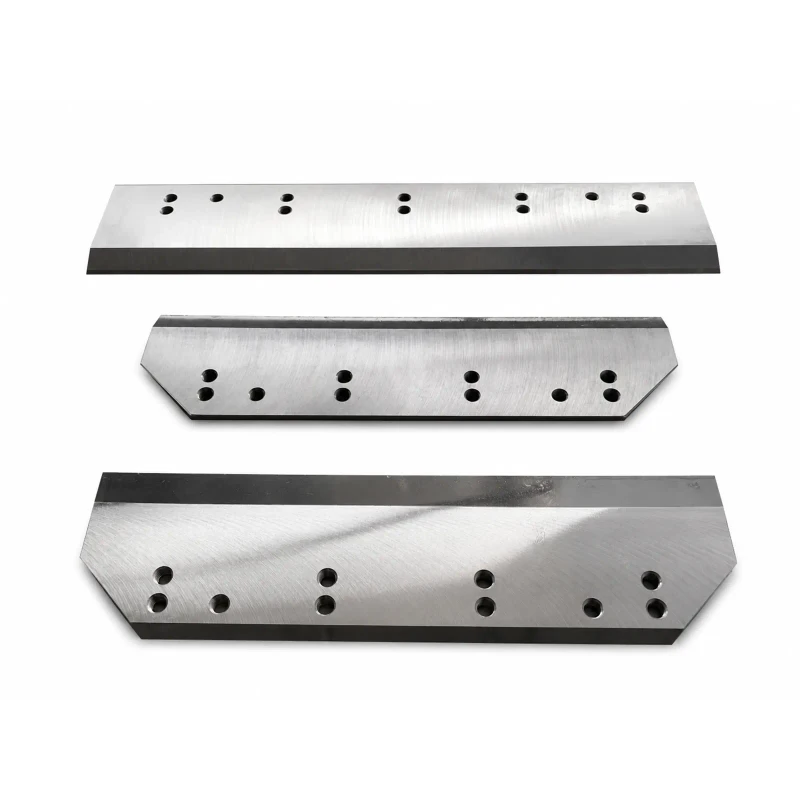
Technical FAQs
01How do I identify a replacement paper cutter blade?
+−
How do I identify a replacement paper cutter blade?
Use the full cutter model and version with the original knife reference or drawing. Check length, body and edge thickness, mounting holes and bevel orientation together. A used sample should include its grinding history. The cutter's advertised working width helps identify the machine, while the complete knife dimensions establish the replacement.
02When should I consider a carbide-tipped paper guillotine knife?
+−
When should I consider a carbide-tipped paper guillotine knife?
Carbide is worth assessing when gradual edge wear on the actual paper stock drives frequent knife changes. Coatings, fillers, recycled content and the available grinding process influence that choice. If the current knife chips or cuts unevenly, inspect its bevel, the cutting stick and clamping conditions alongside the material requirement.
03Are paper cutter blades and paper guillotine knives the same?
+−
Are paper cutter blades and paper guillotine knives the same?
Yes. In industrial stack cutting, both names refer to the straight blade that cuts a clamped stack of paper or board. For machinery that cross-cuts a moving web into sheets, see Paper Sheeter Knives.
04Why can the bottom sheets remain poorly cut after sharpening?
+−
Why can the bottom sheets remain poorly cut after sharpening?
A worn cutting stick, incorrect knife penetration or uneven clamping can leave the bottom sheets poorly cut even with a sharp blade. Check whether the defect is concentrated at the same point across the stack and inspect the corresponding area of the stick. Use the cutter's specified setup to check the cause.
05How should the bevel be selected for coated paper or board?
+−
How should the bevel be selected for coated paper or board?
Start with the specified knife bevel and the stock being processed. Paper structure, coating or filler content and stack conditions influence the cut. Compare edge wear, chipping and cut quality before requesting a different profile. The new bevel must remain compatible with the knife construction and the cutter's working arrangement.
06When should a paper guillotine knife be reground or replaced?
+−
When should a paper guillotine knife be reground or replaced?
Regrinding is appropriate when sufficient knife height and cutting-edge material remain to restore the specified bevel within the cutter's service limits. Inspect the inlay or tipped edge and body before grinding. Replacement is appropriate when damage, remaining edge material or adjustment limits prevent the required working configuration from being restored.
07How do I request a quote for a paper cutter blade?
+−
How do I request a quote for a paper cutter blade?
Send the cutter model and version, original knife number or drawing, paper stock and quantity. For an older machine, include the mounting hole pattern, bevel orientation and new-knife height. If the only reference is a used knife, show its remaining height separately from the new target dimension.
Get in Touch with Our Engineers
Contact Our Team
Discuss your requirements directly with our engineers.