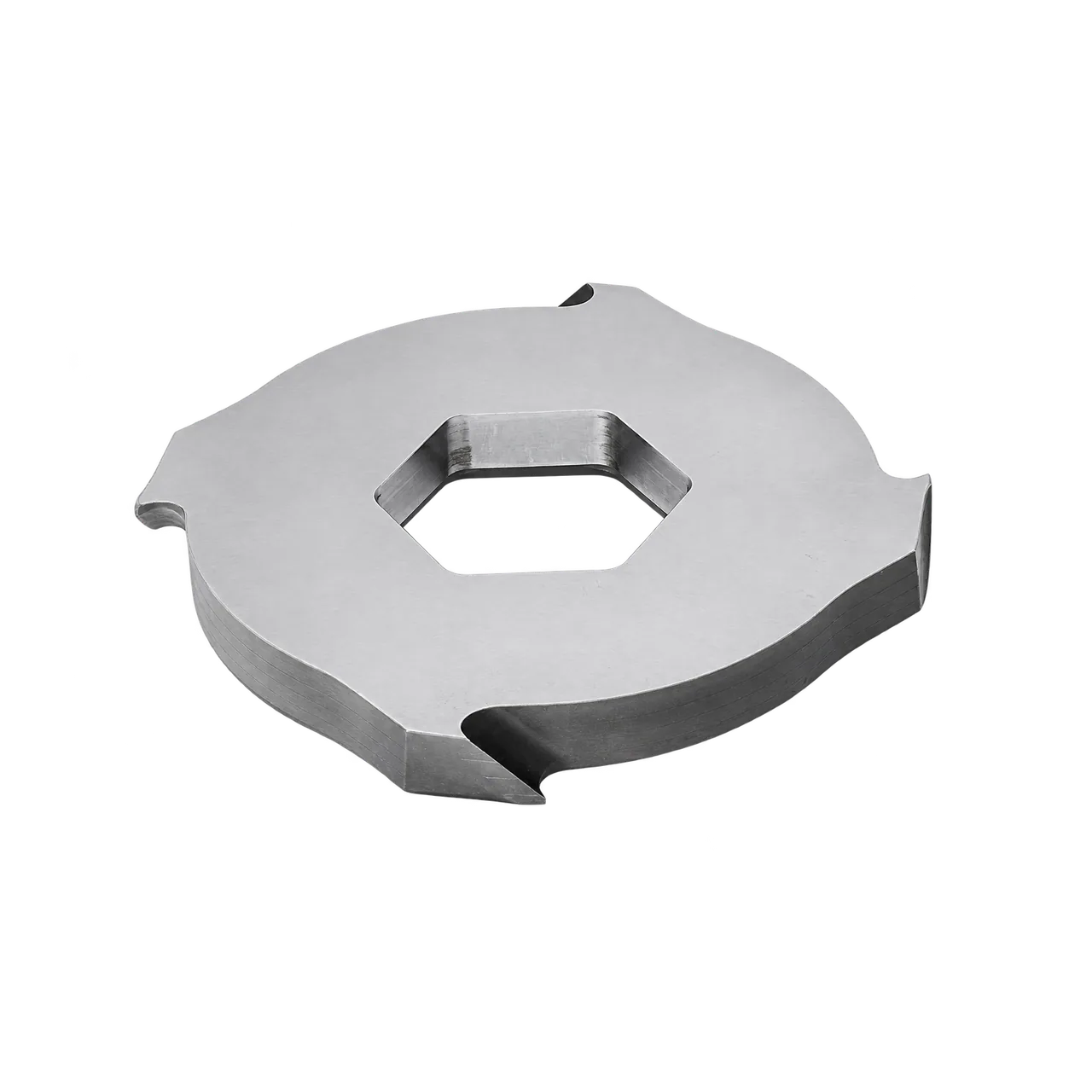
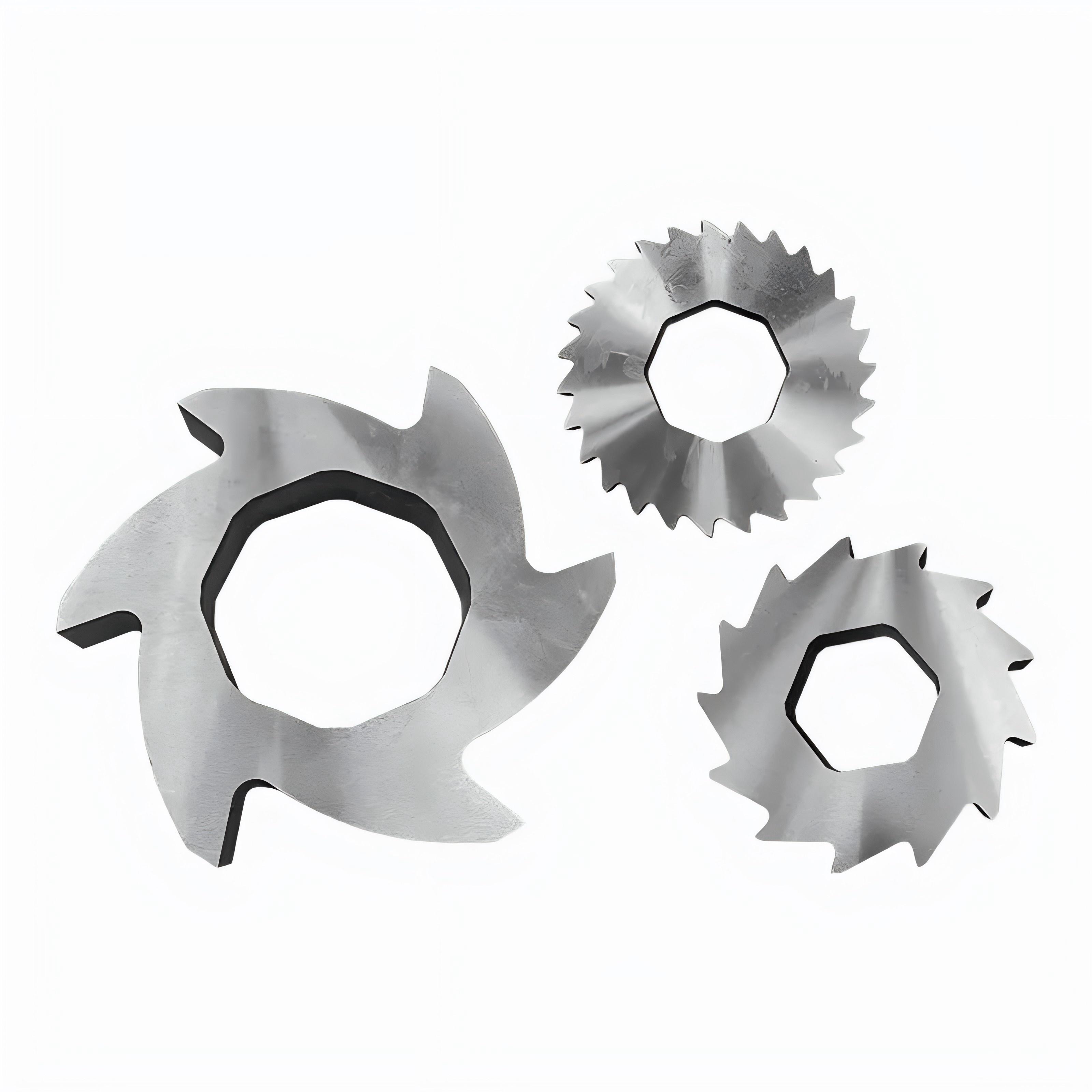
Twin-Shaft Shredder Blades for General Recycling
- ■Sizes: Ø150–450 mm
- ■Material: D2 (1.2379), SKD11, 42CrMo
- ■Application: MSW · Plastics · Wood Pallets · Bulky Waste
Technical Specifications
- Sizes: Listed OD Ø150–450 mm; custom OD up to Ø800 mm; thickness 10–150 mm
- Material: D2 (1.2379), SKD11, 42CrMo
- Hardness: HRC 55–62 (4–5 tempering cycles)
- Claw Count: 3-Claw · 5-Claw · 8-Claw · 12-Claw
- Bore Design: Precision Wire-EDM: Hex / Octagonal / Splined
- Application: MSW · Plastics · Wood Pallets · Bulky Waste
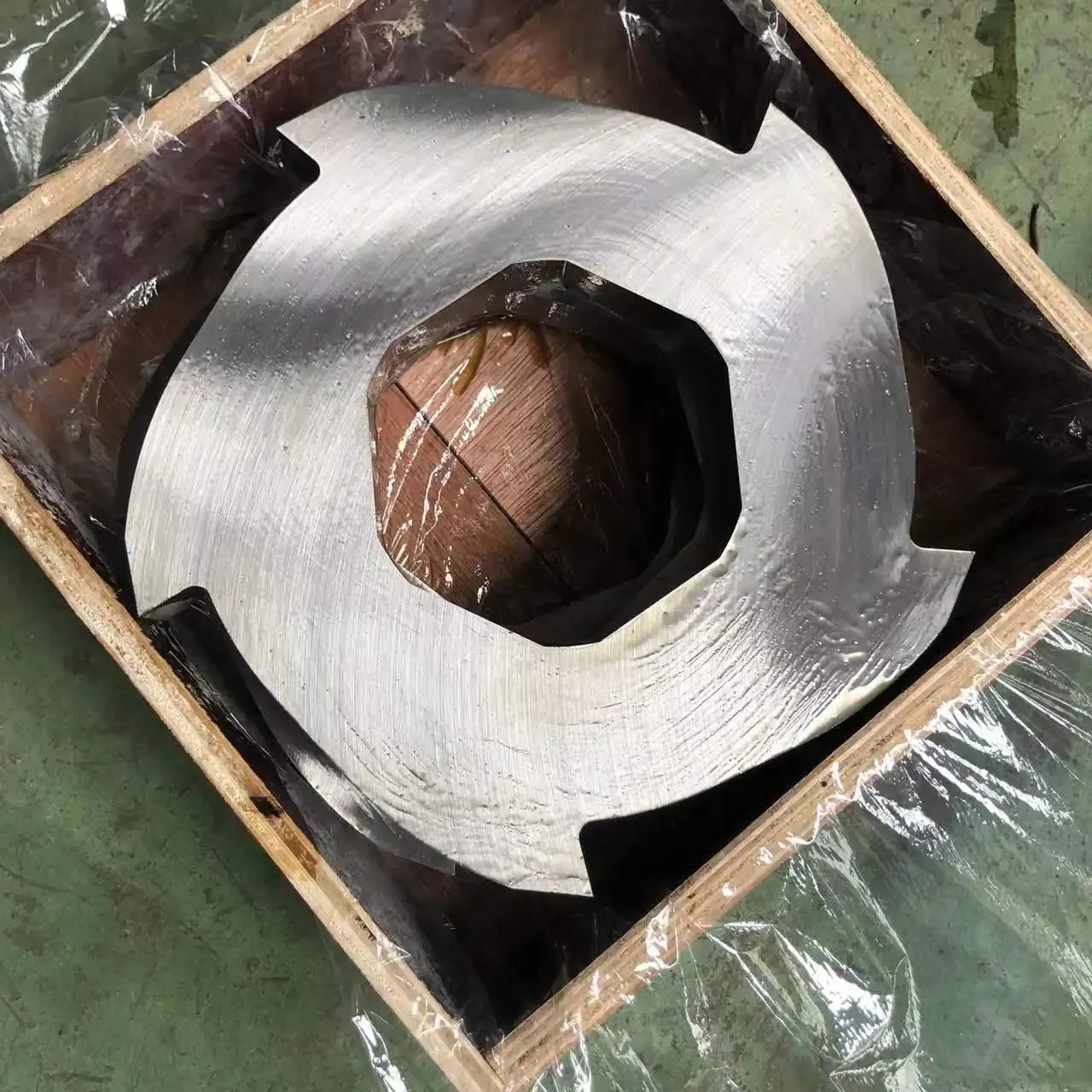
Common Standard Dimensions
Scroll horizontally to view all columns.
| Item No. | Blade Outer Diameter | Blade Thickness | Bore Size | Claw Configuration |
|---|---|---|---|---|
| SR002101 | Φ 150 mm | 15 mm | Hex Ø70 mm | 5-Claw |
| SR002102 | Φ 180 mm | 20 mm | Hex Ø90 mm | 8-Claw |
| SR002103 | Φ 200 mm | 20 mm | Hex Ø140 mm | 8-Claw |
| SR002104 | Φ 250 mm | 25 mm | Hex Ø160 mm | 8-Claw |
| SR002105 | Φ 300 mm | 30 mm | Hex Ø180 mm | 12-Claw |
| SR002106 | Φ 350 mm | 40 mm | Splined Ø200 mm | 12-Claw |
| SR002107 | Φ 400 mm | 40 mm | Splined Ø220 mm | 3-Claw |
| SR002108 | Φ 450 mm | 30 mm | Splined Ø260 mm | 3-Claw |
Need a size that is not listed?
Include the machine model, cutter OD, thickness, bore profile, hook count and spacer width.
Compatible Machine Brands
Keep your recycling line supplied with replacement twin-shaft shredder blades built around your existing cutter stack. Custom hook profiles, thicknesses and wire-EDM bores are available. Share your drawing or sample for a quotation for individual cutters or a complete set. Machine brands are compatibility references for Sureay aftermarket parts.
Engineering Advantages
Steel Options for General Recycling
D2, SKD11 and 42CrMo cutters are available for plastics, wood pallets and mixed-waste shredding, giving replacement orders a material choice alongside the required hook and shaft geometry.
Custom Hooks and Wire-EDM Bores
Sureay makes hooked cutters with hexagonal, octagonal or splined bores. Listed configurations span Ø150–450 mm, with custom diameters up to Ø800 mm for drawing-based replacements.
Individual Cutters and Complete Changeout Sets
Order a single cutter configuration or a set covering several shaft positions, with the required thicknesses, hook orientations and quantities defined for your installed cutting stack.
Related Blades & Parts
View All →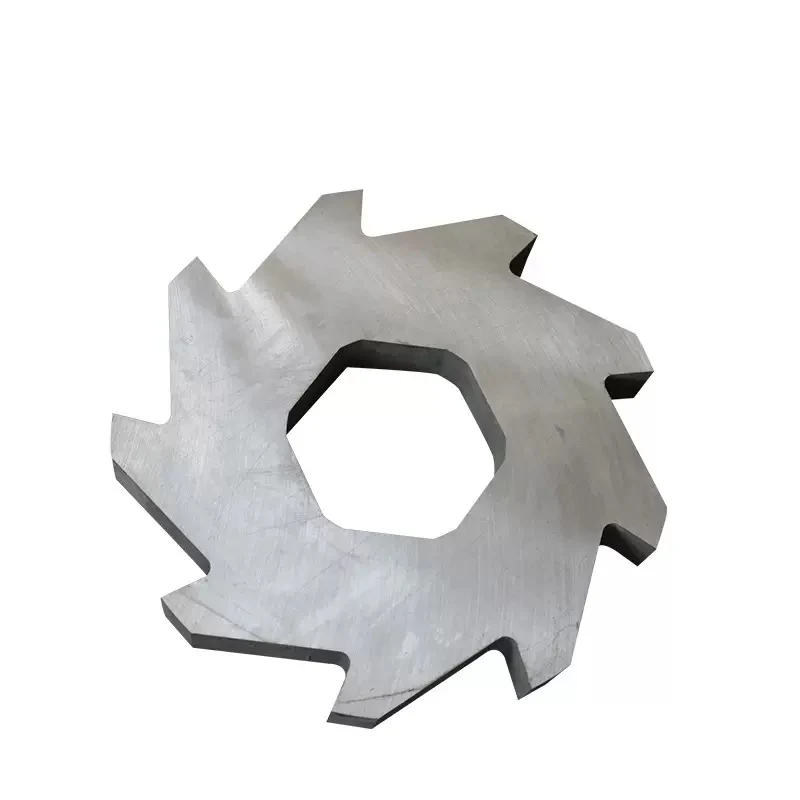
Technical FAQs
01Which replacement blades fit a twin-shaft shredder?
+−
Which replacement blades fit a twin-shaft shredder?
A replacement fits when its bore, hook profile, thickness and installed orientation match its position in the cutter stack. Two cutters with the same outside diameter can have different bore sizes or hook directions. Use the part reference and spacer layout to tell similar cutters apart.
02Are twin-shaft, double-shaft and dual-shaft shredder blades the same?
+−
Are twin-shaft, double-shaft and dual-shaft shredder blades the same?
Yes. In rotary-shear recycling equipment, all three names commonly refer to cutters on the machine's two shafts. Hooked cutters and claw blades describe the cutting outline. A knife set refers to multiple parts, so match each cutter to its own shaft position.
03How do hook count and cutter thickness affect replacement selection?
+−
How do hook count and cutter thickness affect replacement selection?
Hook geometry influences how the cutter engages the feed. Cutter thickness and spacer width establish the axial arrangement of the cutting stack. Retain those dimensions for a like-for-like replacement. A change in hook count or width needs to be considered with the opposing cutters and the material being processed.
04When should wear resistance or toughness guide the steel choice?
+−
When should wear resistance or toughness guide the steel choice?
Gradual rounding of the working edge makes wear resistance a useful comparison. Repeated chips or broken hooks also require attention to toughness, edge support and feed impact. Evaluate the original steel and heat-treated condition together with the damage pattern, so the replacement material addresses the condition observed on that machine.
05What can cause cutters to wear or chip prematurely?
+−
What can cause cutters to wear or chip prematurely?
Abrasive feed can accelerate gradual wear, while unexpected hard objects or excessive local loading can damage hooks and cutting faces. A loose or incorrectly assembled cutter stack can contribute to damage as well. Compare where the damage occurs with the feed history and stack condition before changing the replacement specification.
06Do plastics, scrap metal and tires use the same cutter configuration?
+−
Do plastics, scrap metal and tires use the same cutter configuration?
Usually no. General recycling cutters are configured for plastics, wood pallets and mixed waste. The feed loads and cutter geometry differ in dedicated Scrap Metal Shredder Blades and Tire Shredder Blades. Choose the range for your feed and match the configuration to your installed machine.
07What information do you need to quote twin-shaft shredder blades?
+−
What information do you need to quote twin-shaft shredder blades?
Send the machine model, cutter drawing or part number, feed material and quantities by shaft position. For a complete changeout, include the spacer layout, cutter thicknesses and hook directions. A worn sample can show the bore and mounting details. Mark the worn hook tips and add an unused reference or original drawing if available.
Get in Touch with Our Engineers
Contact Our Team
Discuss your requirements directly with our engineers.