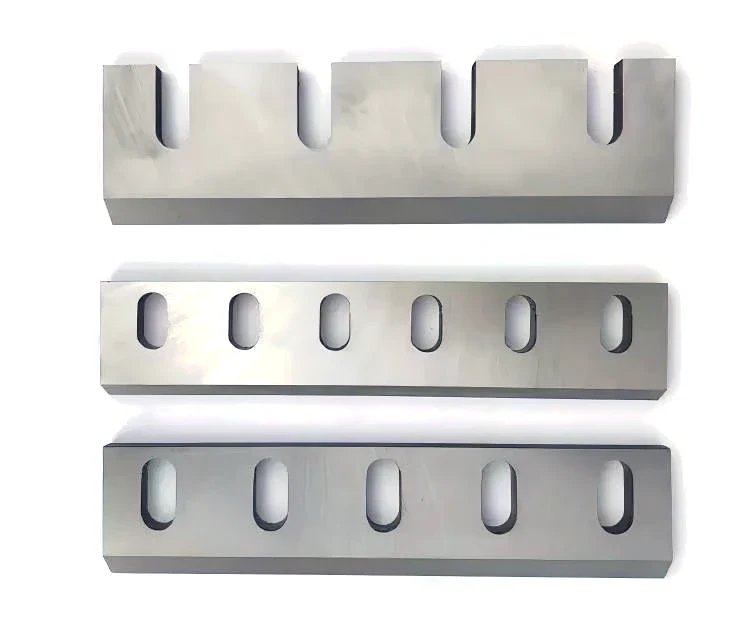
Plastic Granulator Knives: Rotor & Bed Blades
- ■Sizes: 90–1178 mm
- ■Material: D2 (1.2379), SKD-11, DC53 or Cr12MoV
- ■Application: Plastic regrind production
Decisive Specifications
Straight and skewed knife arrangements change how the edges meet across the cutting chamber. Identify the original arrangement before choosing a replacement set. Manufacturing includes in-house heat treatment and CMM inspection under ISO 9001:2015 quality control.
| Sizes | 90–1178 mm |
|---|---|
| Application | Plastic regrind production |
| Knife positions | Rotating rotor knife and stationary bed knife |
| Material | D2 (1.2379), SKD-11, DC53 or Cr12MoV |
| Hardness | HRC 58–62 |
| Bevel Angle | 30°–55° |
| Bolt-hole Tolerance | ±0.02 mm |
| Face Flatness | ≤0.05 mm |
| Parallelism | ≤0.03 mm |
| Heat Treatment | Vacuum hardening and deep cryogenic treatment (−196°C) |
| Feedstock | PET, PVC, PP, HDPE and engineering plastics |
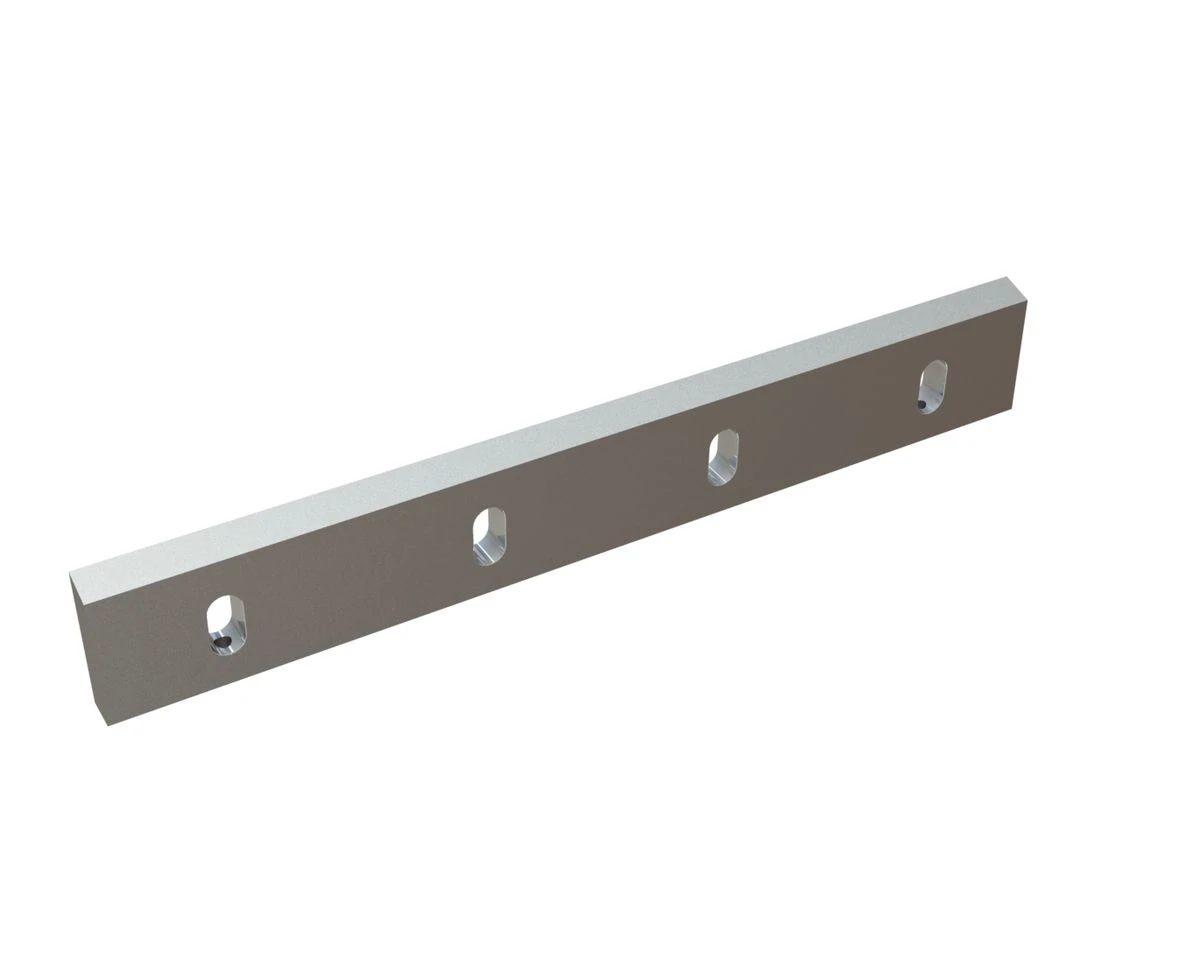
What to Include in Your Quote Request
Include the granulator model, rotor or bed position, knife dimensions, mounting-hole pitch and material being cut.
Common Standard Dimensions
| Item No. | Configuration | Dimensions (L × W × T) | Hole Center Pitch |
|---|---|---|---|
| SR002801 | Double hole | 90 × 70 × 8 | 40 / 45 / 50 |
| SR002802 | Double hole | 120 × 70 × 8 | 60 |
| SR002803 | Triple hole | 126 × 60 × 8 | 40 |
| SR002804 | Triple hole | 150 × 70 × 8 | 50 / 55 |
| SR002805 | Triple hole | 170 × 70 × 8 | 45 |
| SR002806 | Triple hole | 180 × 70 × 8 | 60 |
| SR002807 | Quadra hole | 170 × 70 × 8 | 40 |
| SR002808 | Quadra hole | 200 × 70 × 8 | 50 |
| SR002809 | ZERMA GSP 560/700 rotor — position 501 | 310 × 100 × 22 | To drawing |
| SR002810 | ZERMA GSP 560/700 stator — position 601 | 646 × 100 × 22 | To drawing |
| SR002811 | ZERMA GSH 800/1200 rotor — 80000900 | 568 × 100 × 22 | To drawing |
| SR002812 | ZERMA GSH 800/1200 stator — 80001050 | 1178 × 100 × 22 | To drawing |
| SR002813 | ZERMA GSH 800/1600 rotor — 80000920 | 385 × 100 × 22 | To drawing |
| SR002814 | ZERMA GSH 800/1600 stator — 80001070 | 795 × 100 × 22 | To drawing |
Engineering Advantages
Tool-Steel Options for Plastic Regrind
D2, SKD11, DC53 and Cr12MoV knives provide material choices for plastic regrind production, with the specified steel considered alongside the polymer, fillers and existing cutting arrangement.
Ground Bevels and Defined Mounting Geometry
Sureay supplies rotor and bed knives with specified bevels, working faces and bolt patterns, allowing replacement orders to retain the cutting orientation and seating geometry of the machine.
Custom Rotor and Bed Knife Sets
Sureay supplies individual rotor and bed knives or complete sets to drawing or sample. Listed knife lengths span 90–1178 mm, with moving and stationary positions specified separately for the cutting chamber.
Related Blades & Parts
View All →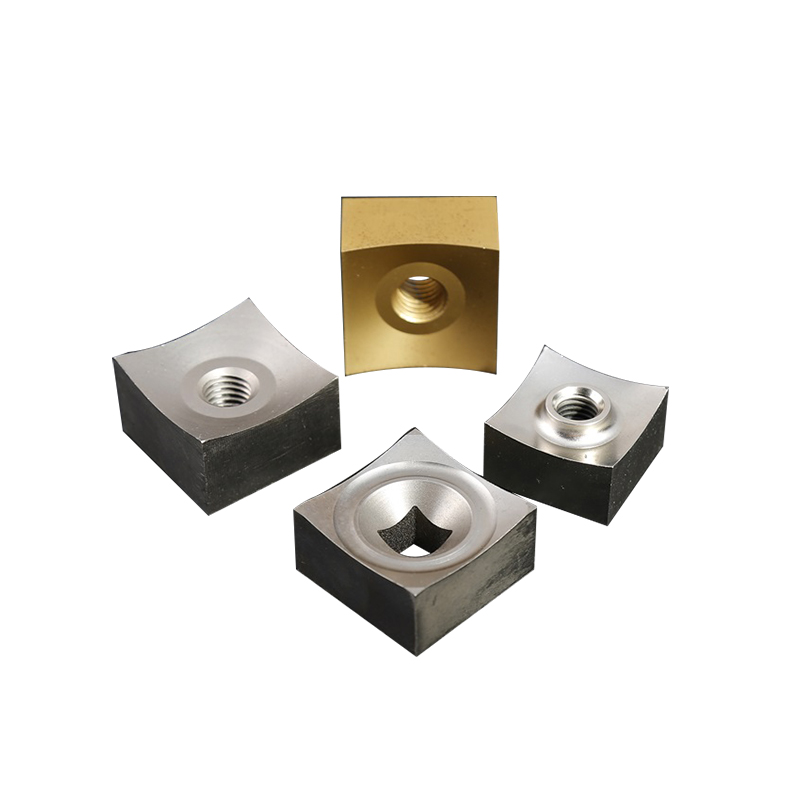
Technical FAQs
01How do I select replacement knives for my plastic granulator?
+−
How do I select replacement knives for my plastic granulator?
Use the machine model, knife position and original part number, then compare the length, section, bevel and fixing pattern. Rotor and bed knives can differ within the same machine. The standard-dimensions table gives individual configurations, while the knife drawing establishes the exact replacement for your installed cutting chamber.
02What do rotor knives, fly knives and bed knives mean?
+−
What do rotor knives, fly knives and bed knives mean?
Rotor knives, also called fly knives, move with the granulator rotor. Bed knives form the stationary opposing edge. Plastic crusher knives is a broader purchasing name sometimes used for these parts. Identify the actual machine and position, because the same terms can be used for different cutting arrangements in size-reduction equipment.
03When should the polymer or filler content change the material choice?
+−
When should the polymer or filler content change the material choice?
Abrasive fillers and contamination can alter how quickly the working edge wears, while impact and brittle edge damage raise different concerns. Compare the actual compound and used knife with the current material specification. That comparison helps assess a replacement grade without changing the machine's required knife section, bevel or mounting geometry.
04Why does a granulator produce more fines or poorer regrind?
+−
Why does a granulator produce more fines or poorer regrind?
A dull cutting pair, incorrect rotor-to-bed clearance or a worn screen can increase fines or change regrind quality. Look for rounded edges or uneven wear across the rotor and bed knives and compare output under the same feed conditions before changing the knife specification.
05Is there one standard knife gap for all granulators?
+−
Is there one standard knife gap for all granulators?
No. The specified rotor-to-bed gap depends on your granulator and its knife configuration. The OEM settings identify which knives can be adjusted and the minimum knife dimensions after regrinding. Check both limits when fitting a sharpened or replacement set.
06Why do straight and slanted knife arrangements need different drawings?
+−
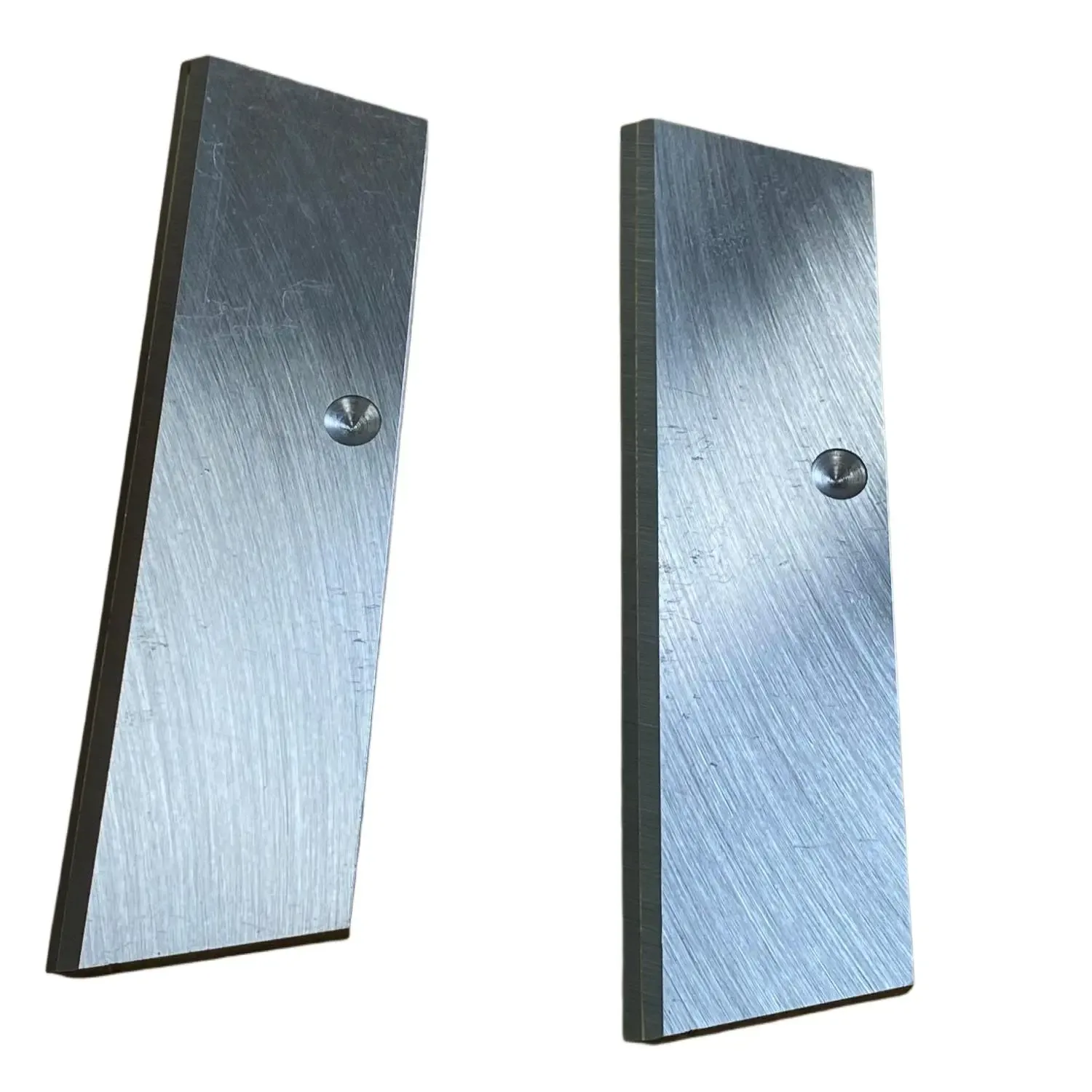
Why do straight and slanted knife arrangements need different drawings?
The cutting angle can result from the knife profile, its position on the rotor or bed, or both. The overall knife length therefore describes only part of the configuration. The drawing needs to preserve the bevel orientation and fixing geometry used by the machine's rotor-and-bed combination.
07When can granulator knives be reground?
+−
When can granulator knives be reground?
Regrinding is suitable when the specified cutting profile can be restored within the permitted minimum knife dimensions. Check the remaining height and adjustment allowance against the machine instructions. Knives that have reached their service limit or cannot recover a sound edge need replacement, with rotor and bed positions assessed as a working pair.
08What information is needed to quote plastic granulator rotor and bed knives?
+−
What information is needed to quote plastic granulator rotor and bed knives?
Send the granulator model and separate drawings, part numbers or samples for the rotor and bed positions, plus the plastic type, fillers and quantity for each knife. Show the bevel and hole pattern for each position. Mark the reground height separately if your only reference is a sharpened knife.
Get in Touch with Our Engineers
Contact Our Team
Discuss your requirements directly with our engineers.