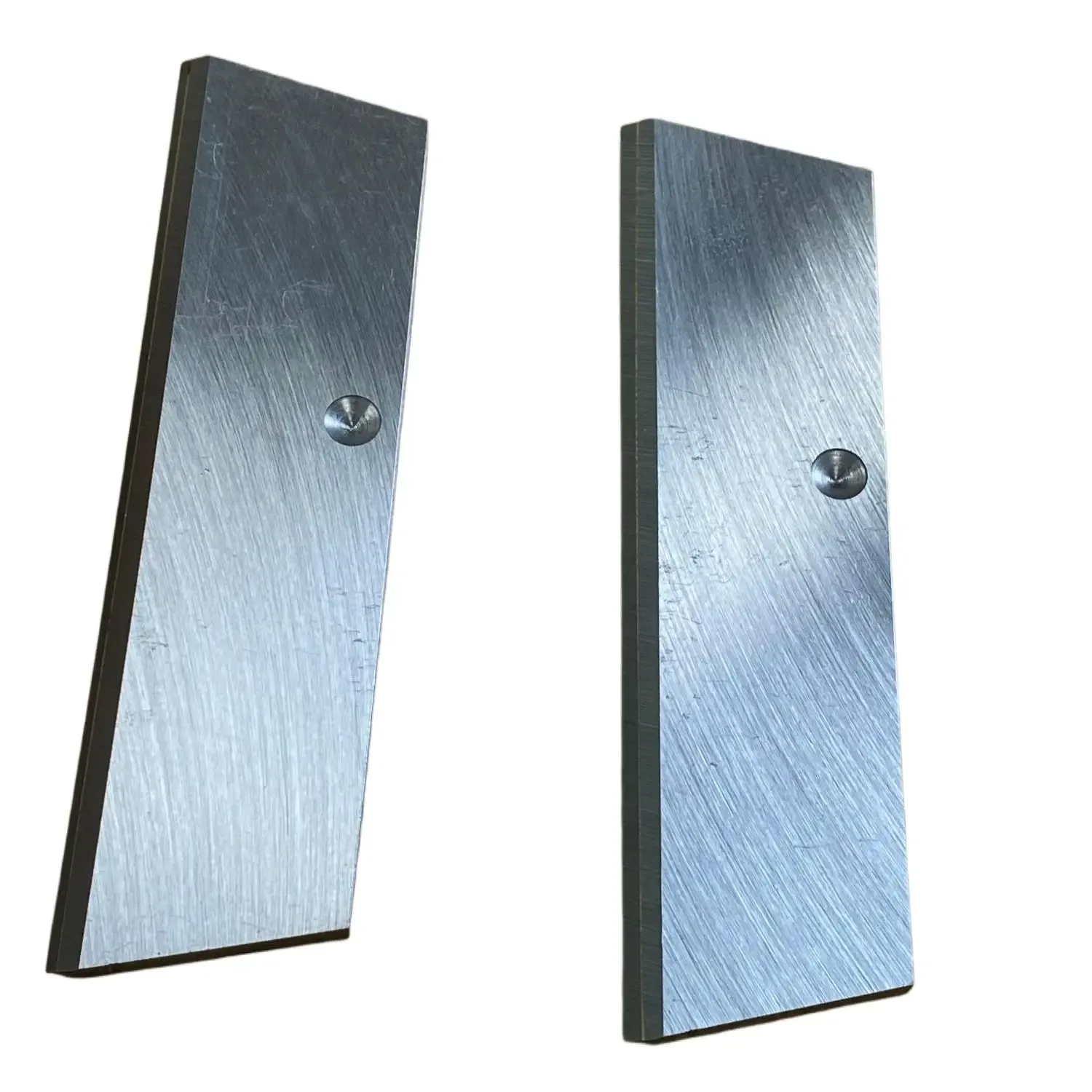
Cutter Compactor Rotor & Stator Knives
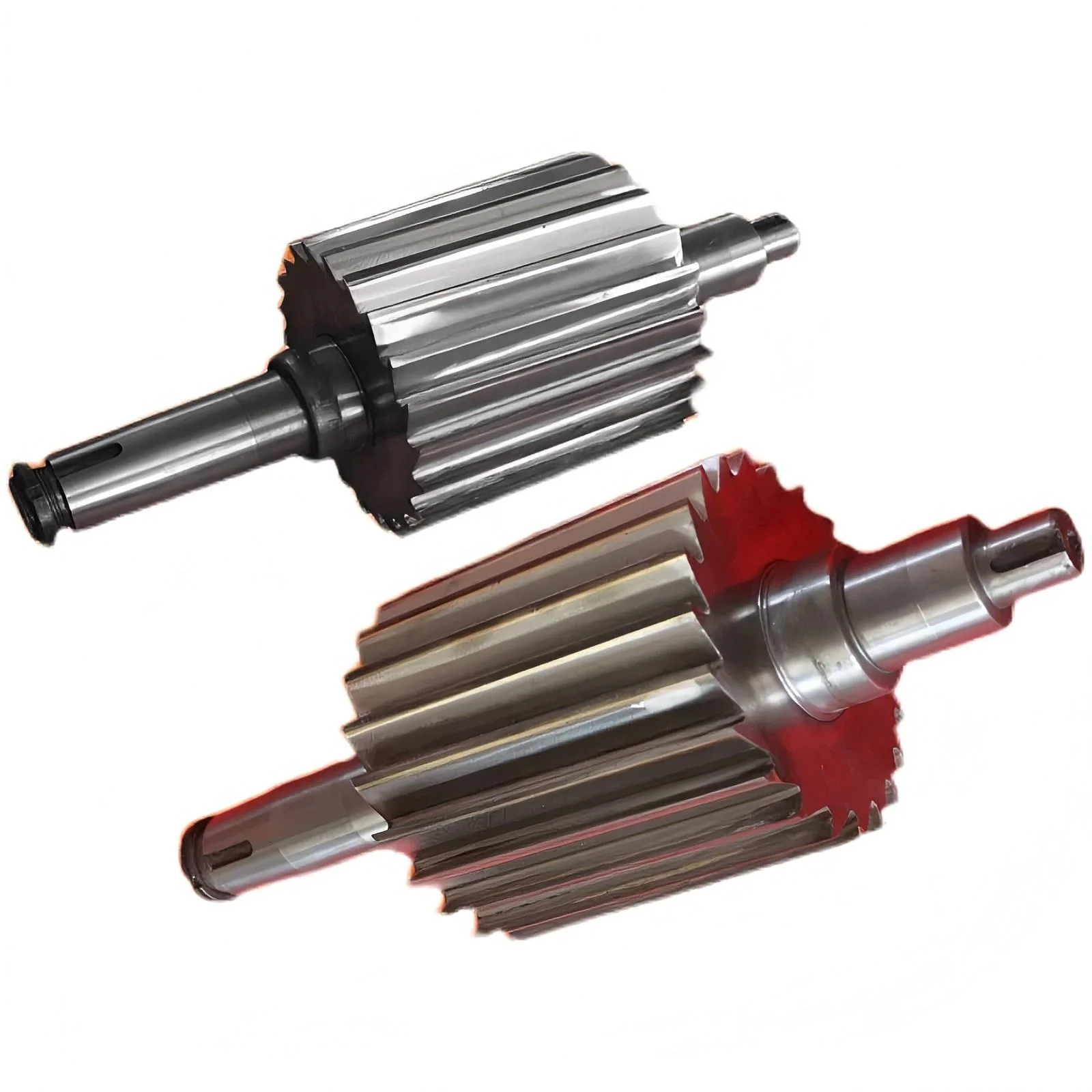
Cutter Compactor Blades
Rotor and stator knives for cutter compactors and agglomerators in D2, M2 HSS and carbide-tipped. Drop-in fit for EREMA, NGR, Starlinger and Previero.
- ■Material: D2 (1.2379) · M2 HSS (1.3343) · Carbide-tipped
- ■Applications: PE / PP Film, PET Flake, Woven Bags, Fibre, Foam
■ ISO 9001:2015 Certified
■ In-House Heat Treatment
■ Strict Dimensional Tolerances
■ Global Door-to-Door Delivery
[ Engineering Reference ]
Decisive Specifications
| Knife Types | Rotor (movable) · Stator (fixed) · Pre-cutter · Holder block |
|---|---|
| Material | D2 (1.2379) · M2 HSS (1.3343) · Carbide-tipped |
| Hardness | HRC 58–61 (D2) · HRC 62–64 (M2) · HRA 89–91 (carbide) |
| Typical Cutting Gap | 0.2 – 0.5 mm (machine-dependent) |
| Face Flatness | ≤ 0.03 mm over full blade length |
| Parallelism | ≤ 0.02 mm |
| Heat Treatment | Vacuum Hardening + Deep Cryogenic (-196°C) |
| Applications | PE / PP Film, PET Flake, Woven Bags, Fibre, Foam |
| OEM Fitment | EREMA, NGR, Starlinger, Previero, Sorema, Erdwich |
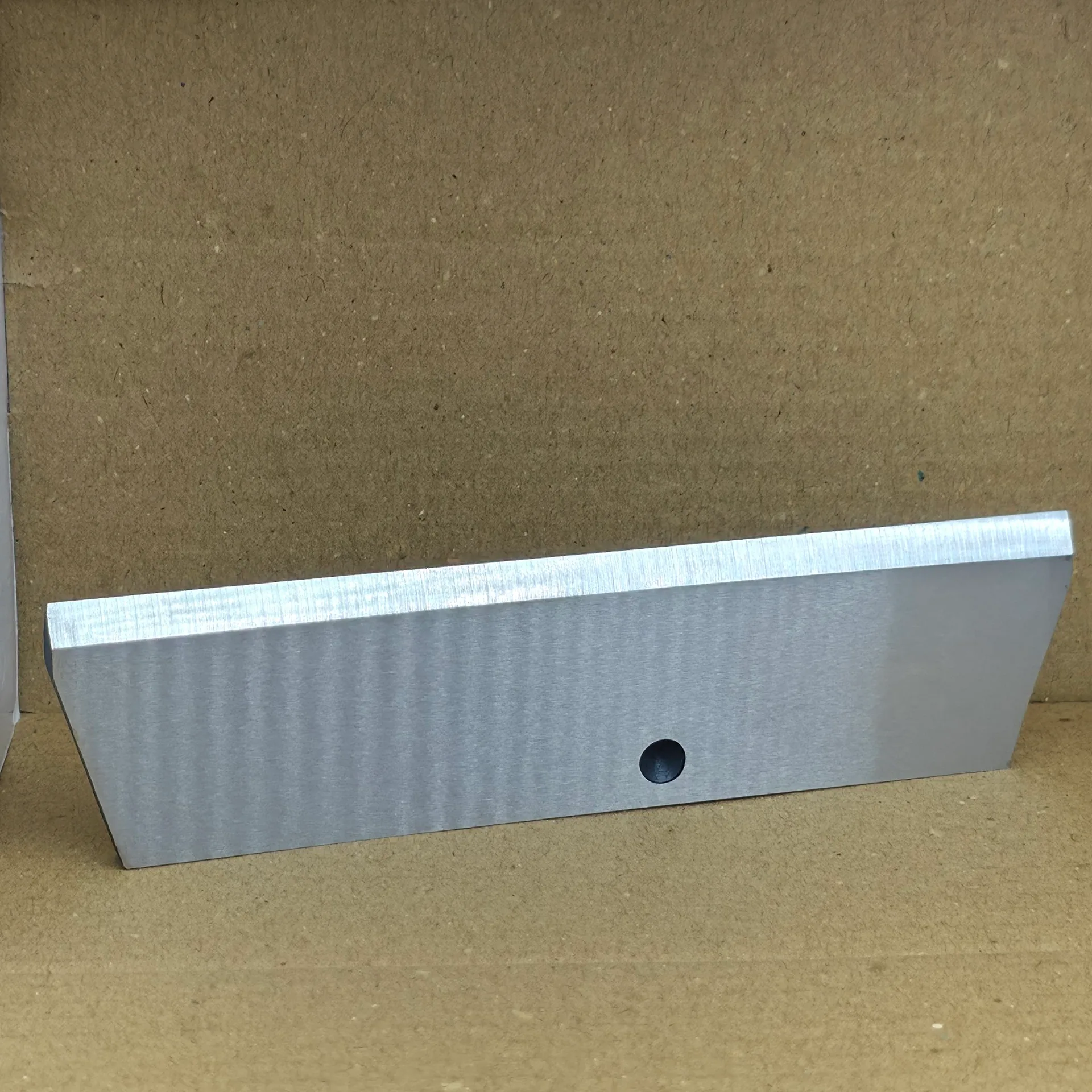
■ All values verified via CMM inspection · ISO 9001:2015
[ RFQ Prompt ]
Need a Specific Size or OEM Replacement?
Don't see your exact specs? Send us a blueprint, a worn sample, or just your machine model. Our team will review the details and provide a tailored quotation.
[ Standard Reference ]
Common Standard Dimensions
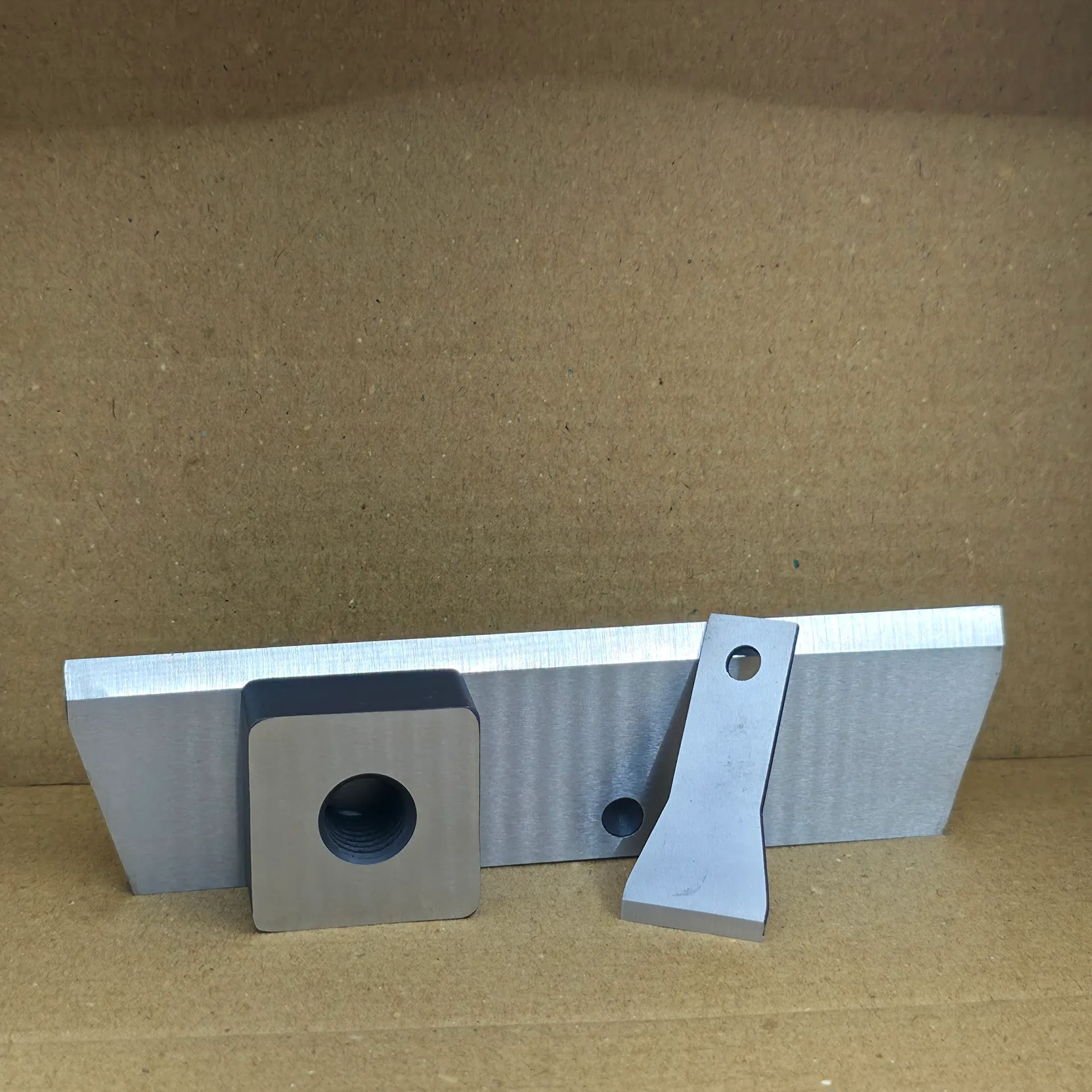
| Knife Type | Length (mm) | Width (mm) | Thickness (mm) |
|---|---|---|---|
| Rotor knife (movable) | 150 – 250 | 40 – 60 | 8 – 12 |
| Rotor knife (movable) | 250 – 400 | 60 – 80 | 12 – 20 |
| Stator knife (fixed) | 120 – 220 | 40 – 60 | 10 – 16 |
| Stator knife (fixed) | 220 – 350 | 60 – 80 | 16 – 25 |
| Pre-cutter / feed blade | 80 – 160 | 30 – 50 | 8 – 14 |
| Knife holder block | 60 – 120 | 50 – 90 | 20 – 40 |
[ OEM Compatibility ]
Compatible Machine Brands
® Registered trademarks are property of their respective owners. Sureay supplies compatible replacement blades — not OEM-branded parts.
[ Technical Audit ]
Engineering Advantages
Compactor blades fail in one of three ways: the edge goes, the gap drifts, or the blade chips on contamination. Each has a different fix, and specifying for the wrong one wastes money.
A Gap You Set Once and Keep
Ground to ≤0.03 mm flatness and ≤0.02 mm parallelism over the full blade length. The gap you dial in at installation stays uniform end to end, instead of opening at one end and closing at the other as load is applied.
Alloy Matched to What You Actually Run
D2 for clean PE and PP film, M2 HSS for PET flake and dusted post-consumer material that softens D2 at working temperature, carbide-tipped for glass-filled and high-ash streams. Specified from your feedstock, not from a default.
Supplied as Matched Rotor + Stator Sets
Rotor and stator knives wear to different geometries. Fitting a new rotor knife against a worn stator leaves the gap uneven and loads the new blade alone — it dulls in a fraction of its rated life. We quote and ship them as sets.
[ System Inventory ]
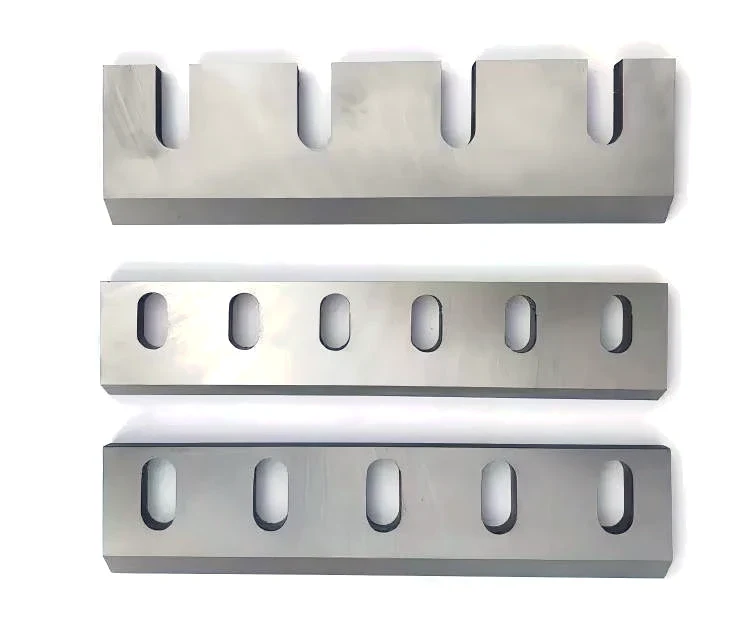
Related Blade Categories
View All →
[ Knowledge Base ]
Product FAQs & Buying Guidance
Technical FAQs
01What cutting gap should I set between the rotor and stator knives?
+−
What cutting gap should I set between the rotor and stator knives?
Use the figure in your machine manual — it is machine- and material-specific, and typically falls somewhere in the 0.2–0.5 mm range. The more useful question is whether the gap stays where you set it. If the blade mounting face is not flat, or if you have fitted a new rotor knife against a worn stator, the gap will vary along the cutting length regardless of how carefully it was dialled in. Set the gap with feeler gauges at both ends and the centre of the blade, not at a single point, and re-check it after the first few hours of running once everything has seated and reached working temperature.
02My compactor is running hot and the output is lumpy instead of a uniform crumb. What's wrong?
+−
My compactor is running hot and the output is lumpy instead of a uniform crumb. What's wrong?
That is the classic signature of an over-wide cutting gap, usually from worn blades. When the gap opens, material is kneaded rather than cut, so frictional heat rises past the intended window, film smears into lumps, and bulk density becomes erratic — which the extruder sees as a fluctuating feed. You will typically also see power consumption up and throughput down at the same time. Check the gap and the blade edges before adjusting temperature setpoints or feed rate, because those are compensations for the real problem rather than fixes.
03Can I replace only the rotor knives and keep the stator knives?
+−
Can I replace only the rotor knives and keep the stator knives?
You can, but it is usually a false economy. The two wear to different geometries — the rotor knife loses its edge while the stator tends to wear a radius and hollow where the material stream concentrates. A new rotor knife running against a worn stator carries the entire cutting load across an uneven gap and will dull far faster than its rated life, so you end up back at the same shutdown sooner. Replacing both together costs more per changeover and less per tonne processed.
04How do I choose between D2, M2 HSS and carbide-tipped blades?
+−
How do I choose between D2, M2 HSS and carbide-tipped blades?
Match the alloy to your feedstock. D2 at HRC 58–61 is the economical default for clean LDPE, LLDPE and PP film, woven bags and pre-consumer scrap. Move to M2 HSS at HRC 62–64 for PET flake and for printed or dusty post-consumer film — M2 holds its edge at the elevated temperature inside a working compactor, where D2 starts to soften. Reserve carbide-tipped blades for glass-fibre reinforced compounds, mineral-filled material and high-ash streams; they last dramatically longer on those feeds but cost more and tolerate impact less well, so they are the wrong choice if your feed contains occasional metal.
05How many times can a cutter compactor blade be re-sharpened?
+−
How many times can a cutter compactor blade be re-sharpened?
Three to five regrinds is typical for D2 and M2 blades before the blade reaches its minimum usable height and the gap can no longer be adjusted to compensate. Each regrind removes material from the cutting face, so the blade sits progressively lower in its holder — most machines allow this to be taken up with shims up to a point. Carbide-tipped blades are re-ground on the carbide only and generally allow fewer cycles. We mark the minimum height on the manufacturing drawing so your maintenance team knows when a blade is finished rather than guessing.
Why Choose Sureay
01Can you make blades for my compactor without an OEM drawing?
+−
Can you make blades for my compactor without an OEM drawing?
Yes — this is the majority of what we do on this product. Send the machine make and model plus a worn blade, or clear photographs with measurements across length, width, thickness and the mounting hole positions. We produce a manufacturing drawing for your written approval before cutting steel, and we keep it on file so repeat orders need no re-measurement.
02What is the lead time, and can I trial a set first?
+−
What is the lead time, and can I trial a set first?
Blades manufactured to an existing drawing ship in 10–15 working days. First-time reverse-engineered blades add roughly 3–5 days for drawing and approval. We supply trial sets for machine-fit verification and edge-life testing before you commit to a production quantity — for custom profiles we produce a dimensional sign-off sample first, so there is no tooling commitment until fit is confirmed.
03What documentation comes with the blades?
+−
What documentation comes with the blades?
Each shipment includes a Rockwell hardness test certificate, a dimensional inspection record against the approved drawing, a steel mill material traceability certificate and a heat treatment batch record. Full CMM dimensional reports are available on request for OEM qualification.
Reach Our Team
Get in Touch with Our Engineers
Contact Our Team
Discuss your requirements directly with our engineers.
Request a Quote
Our engineering team responds within 2 hours.