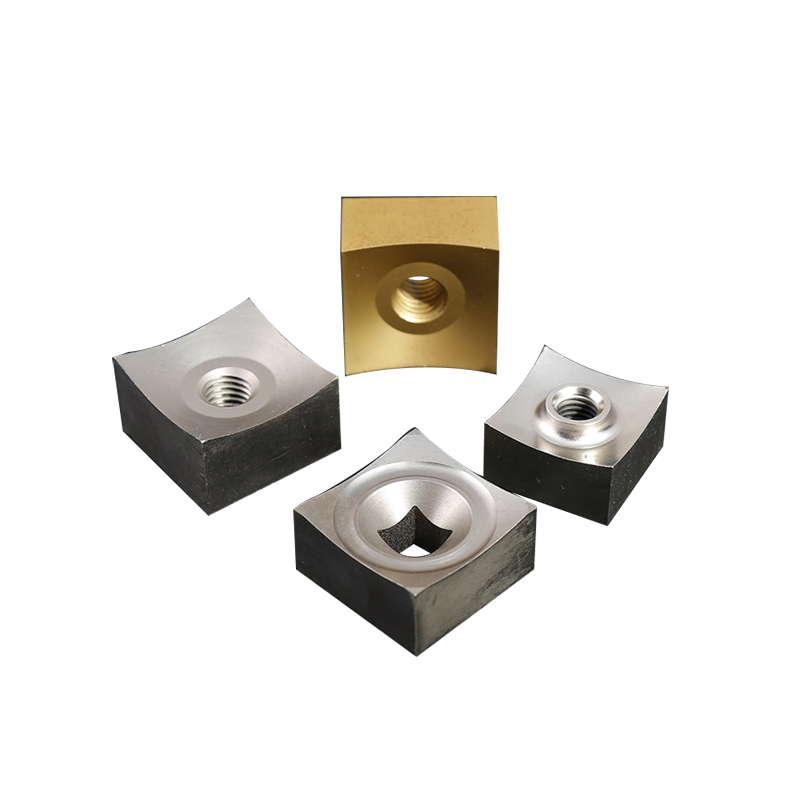
High-Impact Single Shaft Shredder Rotor Inserts (Crown Cutters)
Single Shaft Rotor Inserts
DC53, D2 (1.2379), and Cr12MoV cold-work tool steel rotor inserts for low-speed, high-torque single-shaft shredders. Vacuum-hardened and cryogenically processed to HRC 58–62, CNC-machined to ±0.02mm face tolerance. Features 4-way indexable square geometry. Drop-in compatible with Vecoplan, Weima, Lindner, and Zerma platforms.
- ■Material: DC53, D2 (1.2379), Cr12MoV, 42CrMo
- ■Application: HDPE/PVC Pipes · Injection Purgings · Wood Pallets · IBC Totes · MSW
■ ISO 9001:2015 Certified
■ In-House Heat Treatment
■ Strict Dimensional Tolerances
■ Global Door-to-Door Delivery
[ Engineering Reference ]
Decisive Specifications
| Material | DC53, D2 (1.2379), Cr12MoV, 42CrMo |
|---|---|
| Target Hardness | HRC 58–62 (Cryogenically Stabilized) |
| Machining Tolerance | ±0.02 mm Face Flatness |
| Edge Geometry | 4-Way Indexable (90° Rotation) |
| Face Profile | Concave, Flat, V-Groove, Crown |
| Mounting Style | M12 to M24 Countersunk Hex Bolt |
| OEM Fitment | Vecoplan, Weima, Lindner, Zerma, Cresswood |
| System Integration | Matched Bed Knives available separately |
| Application | HDPE/PVC Pipes · Injection Purgings · Wood Pallets · IBC Totes · MSW |
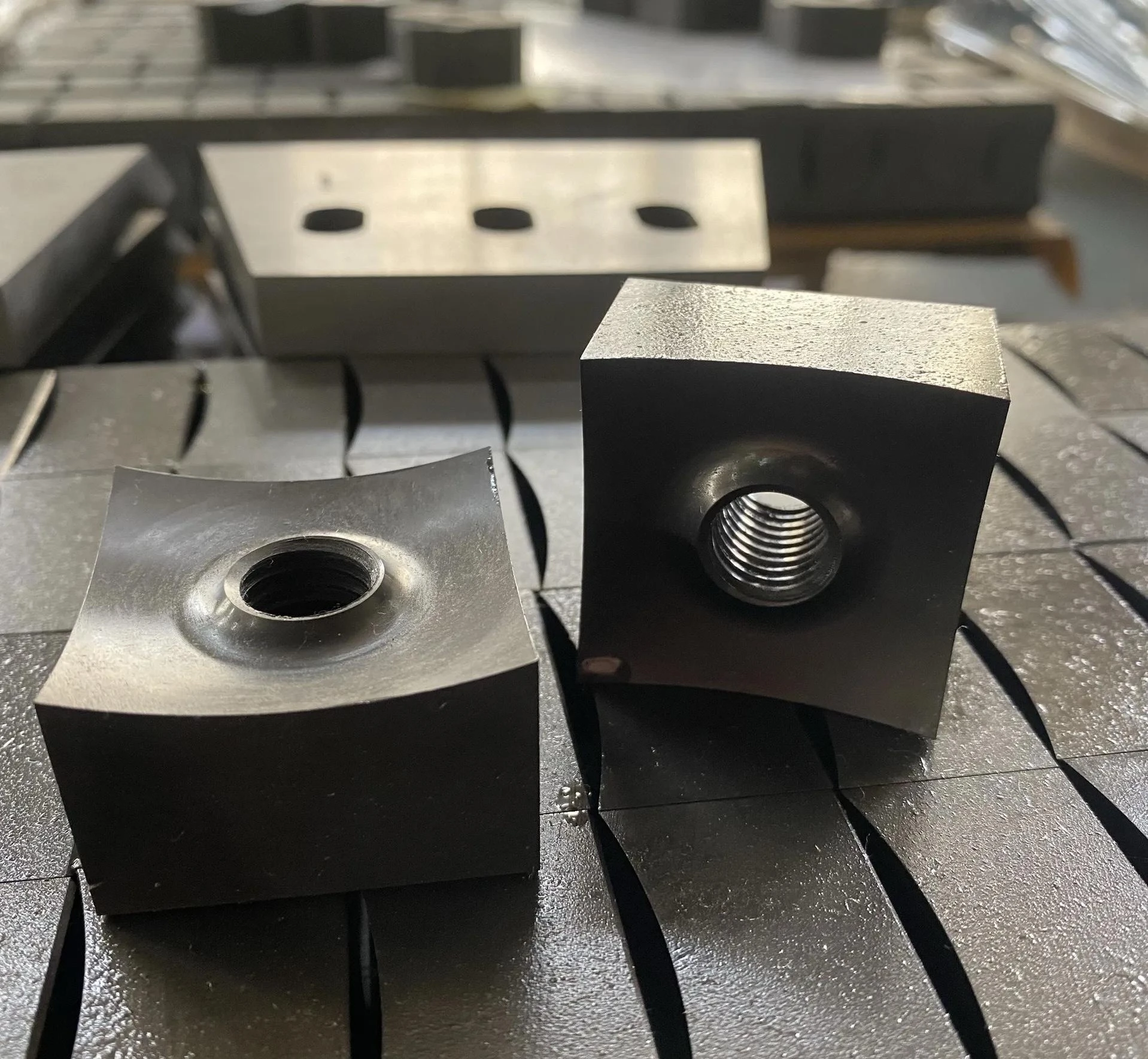
■ All values verified via CMM inspection · ISO 9001:2015
[ RFQ Prompt ]
Need a Specific Size or OEM Replacement?
Don't see your exact specs? Send us a blueprint, a worn sample, or just your machine model. Our team will review the details and provide a tailored quotation.
[ Standard Reference ]
Common Standard Dimensions
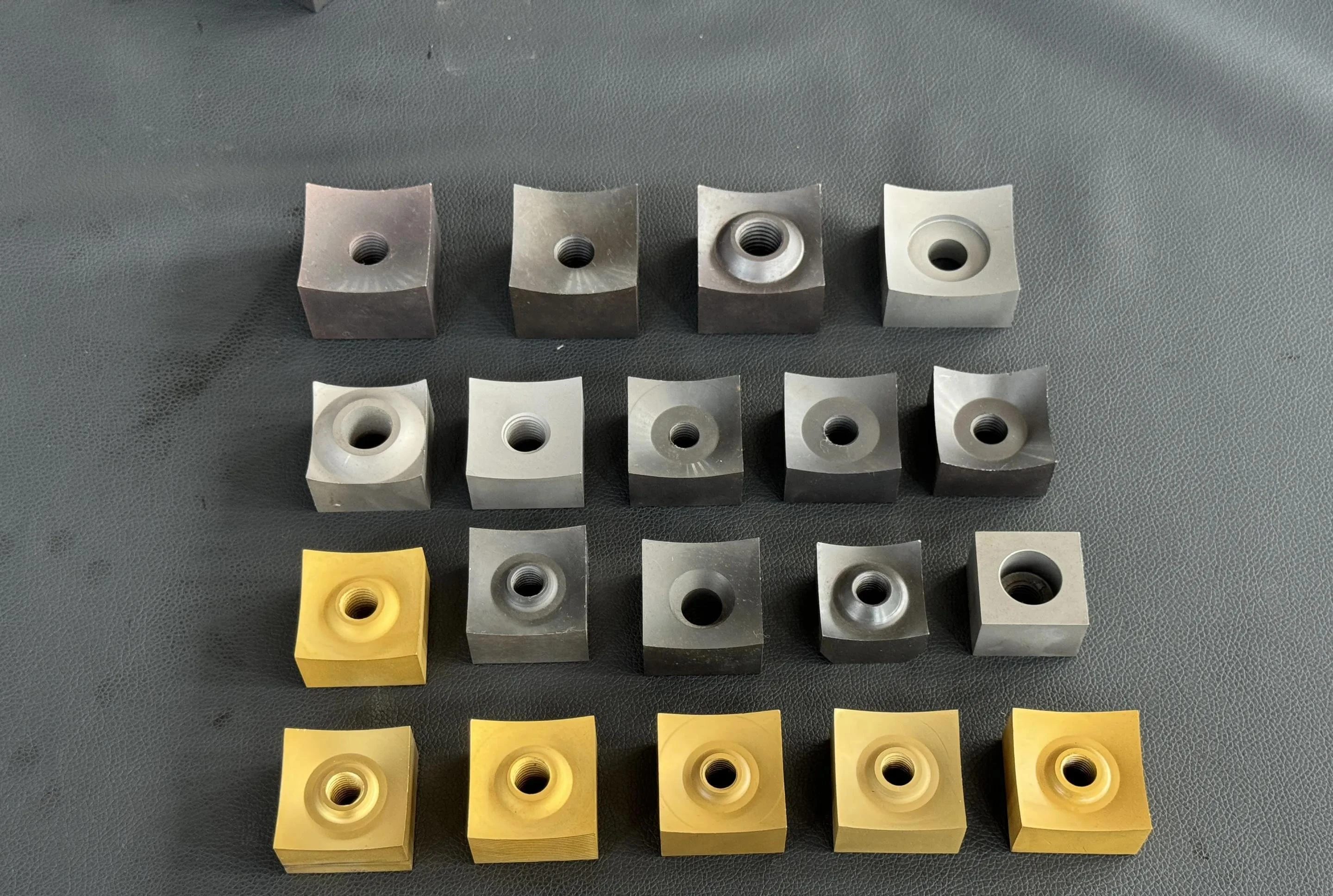
| Insert Dimensions (L × W × T) | Bolt Size | Insert Profile | Typical OEM Platform |
|---|---|---|---|
| 34 × 34 × 23 mm | M12 | Concave / Flat | Weima / Vecoplan Standard |
| 40 × 40 × 25 mm | M14 | Concave / Flat | Vecoplan / Heavy Plastics |
| 43 × 43 × 19.5 mm | M14 | Crown / Concave | Lindner Micromat / Urraco |
| 50 × 50 × 30 mm | M16 | Concave / Flat | Heavy Duty MSW |
| 60 × 60 × 30 mm | M16 / M18 | Flat / V-Groove | Zerma / Tyre Shredding |
| 80 × 80 × 45 mm | M24 | Concave | Extreme High-Torque |
[ OEM Compatibility ]
Compatible Machine Brands
® Registered trademarks are property of their respective owners. Sureay supplies compatible replacement blades — not OEM-branded parts.
[ Technical Audit ]
Engineering Advantages
4-Way Indexable Edges
The symmetrical square design allows for a 90° rotation when dull. This quadruples the lifespan of a single blade, cutting replacement costs by 75% and minimizing maintenance downtime.
Aggressive Concave Profiling
Precision CNC-machined concave faces ensure an aggressive bite into smooth, dense plastic lumps, preventing material from bouncing or bridging on the rotor during low-speed shredding.
Deep Cryogenic Tempering
Processed at −196°C to eliminate internal residual stress. This guarantees the blade will absorb massive kinetic shocks without shattering when hitting hidden metal inclusions.
[ System Inventory ]
Related Blade Categories
View All →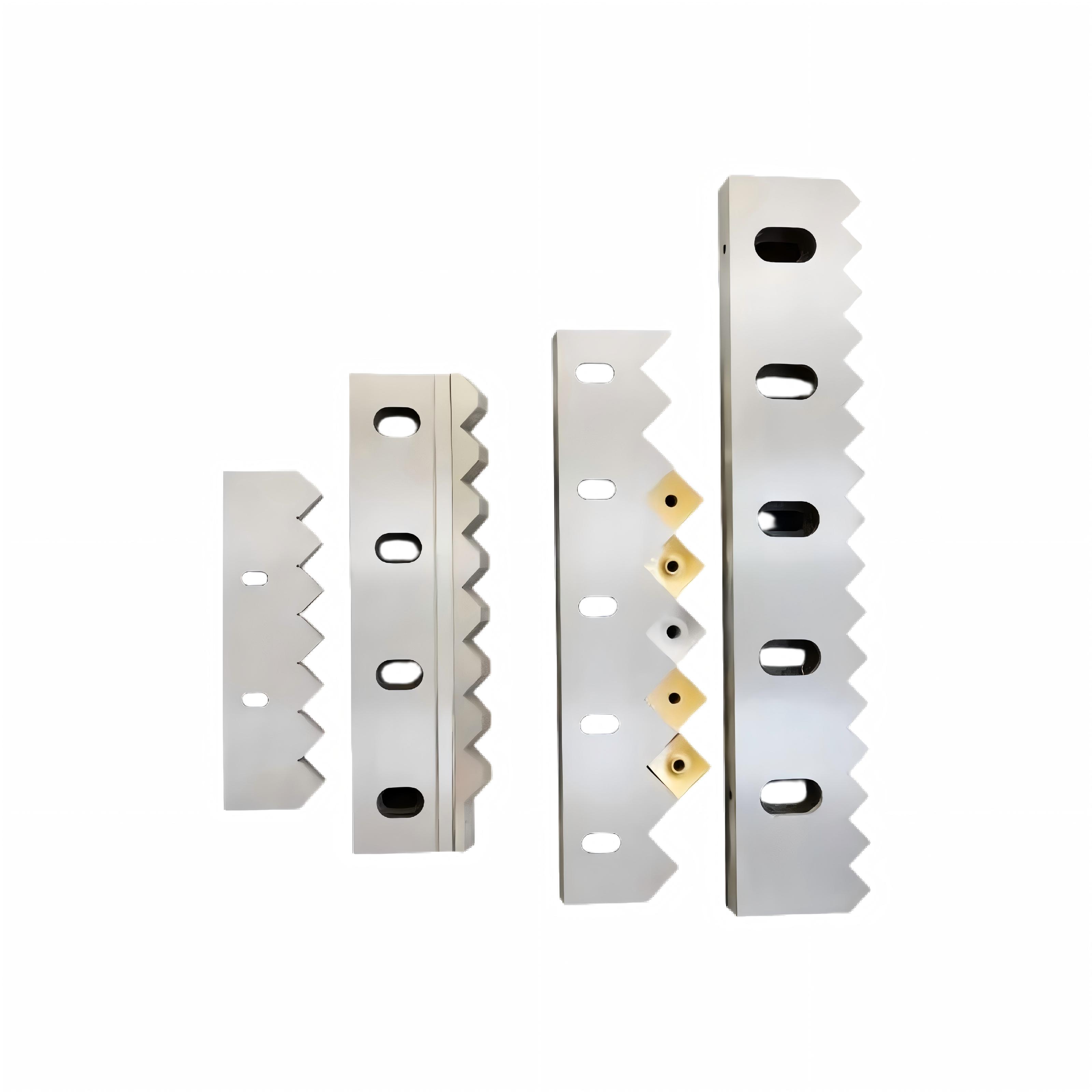
[ Knowledge Base ]
Product FAQs & Buying Guidance
Technical FAQs
01Which alloy offers better edge retention for cutting rigid purges: D2 or DC53?
+−
Which alloy offers better edge retention for cutting rigid purges: D2 or DC53?
For dense injection-moulding purges and thick-wall HDPE on single-shaft rotors at 80–120 RPM, DC53 consistently outperforms D2. Single-shaft impact loading exposes DC53's 17% higher transverse rupture strength, resisting the micro-chipping at the cutting face that D2 typically develops on rigid purge material after 300–500 operating hours.
02What causes material wrap-back and rotor stalling?
+−
What causes material wrap-back and rotor stalling?
Wrap-back is usually caused by inconsistent face flatness across the rotor insert stack, creating uneven knife-to-bed clearance. Material passes through wide gaps instead of being sheared, circulates back, and clogs the rotor pocket. Our inserts are CNC-machined to ±0.02mm face flatness to eliminate this.
03How does the four-edge indexable design reduce tooling costs?
+−
How does the four-edge indexable design reduce tooling costs?
Each square insert has four independent cutting edges. When one edge dulls, loosen the single mounting bolt, rotate the insert 90° to a fresh edge, and retorque. This quadruples the effective service life per blade purchased, reducing annual tooling expenditure by approximately 75% versus non-indexable alternatives.
04What insert geometry is required for shredding large-format IBC totes and HDPE drums?
+−
What insert geometry is required for shredding large-format IBC totes and HDPE drums?
For thick-wall containers, specify concave-faced inserts (50×50mm or 60×60mm). The concave profile creates a positive rake geometry, preventing the blade from skiving across the smooth HDPE surface at initial impact and ensuring immediate penetration during the downstroke.
05Can Sureay supply the matching stationary bed knife?
+−
Can Sureay supply the matching stationary bed knife?
Yes. Stationary bed knives are manufactured as matched sets with rotor inserts, with the clearance face ground to the same ±0.02mm tolerance. A matched bed knife eliminates the clearance guesswork introduced when sourcing rotor inserts and bed knives from separate suppliers.
Why Choose Sureay
01Are you a trading company or a direct manufacturer?
+−
Are you a trading company or a direct manufacturer?
We are a 100% direct OEM manufacturer established in 2008. When you buy from Sureay, you bypass middleman markups and communicate directly with the engineers who forge and grind your blades.
02Do you ship globally and how long does it take?
+−
Do you ship globally and how long does it take?
Yes, we export to over 50 countries. Standard OEM replacement inserts typically ship within 48 hours. Custom profiles take 10–15 working days. We partner directly with DHL, FedEx, and international sea freight forwarders.
03Can we trial a sample set before a full production order?
+−
Can we trial a sample set before a full production order?
Yes. We offer sample sets (typically 2–5 inserts) for machine fit verification and edge life testing. Standard sample lead time is 5–7 working days.
04What quality certifications does Sureay hold, and can you provide material test reports?
+−
What quality certifications does Sureay hold, and can you provide material test reports?
Sureay is ISO 9001:2015 certified. Every shipment includes a Rockwell HRC hardness test report, a dimensional inspection record, and a heat treatment batch certificate. For OEM qualification, full CMM dimensional reports and steel mill certificates are available on request.
Reach Our Team
Get in Touch with Our Engineers
Contact Our Team
Discuss your requirements directly with our engineers.
Request a Quote
Our engineering team responds within 2 hours.