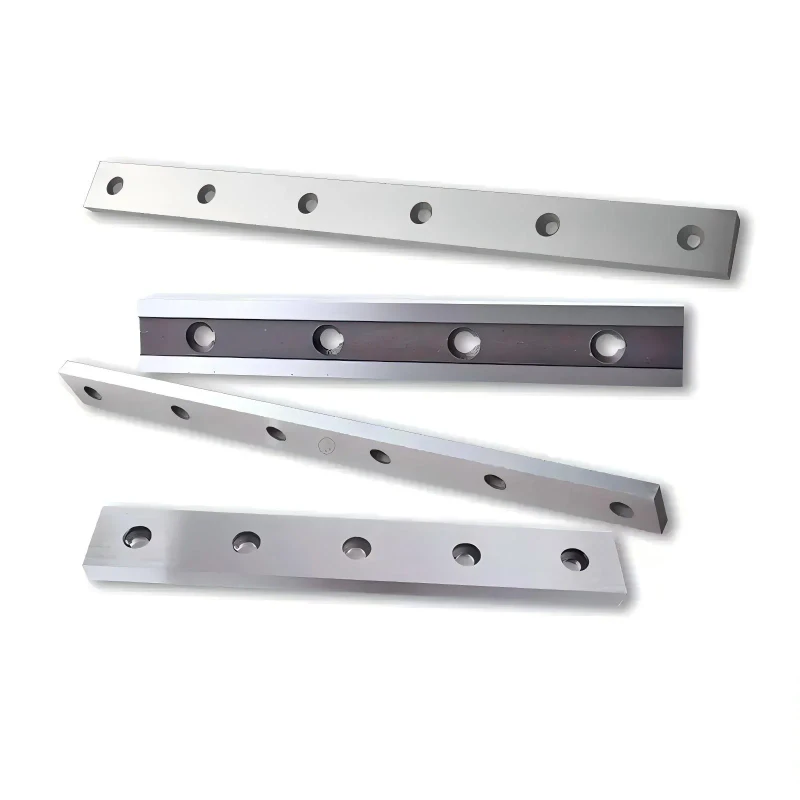
Guillotine Shear Blades for Sheet Metal
- ■Sizes: 508–1300 mm
- ■Material: D2, 6CrW2Si, 9CrSi or high-carbon tool steel
- ■Application: Sheet-metal cutting on a guillotine or squaring shear
Technical Specifications
- Sizes: 508–1300 mm
- Material: D2, 6CrW2Si, 9CrSi or high-carbon tool steel
- Hardness: 55–62 HRC, depending on steel grade
- Knife positions: Upper and lower knives; single-piece or segmented sets
- Edge configurations: One, two or four usable cutting edges, depending on knife profile
- Application: Sheet-metal cutting on guillotine and squaring shears
- Parallelism: ±0.05 mm over the full knife length
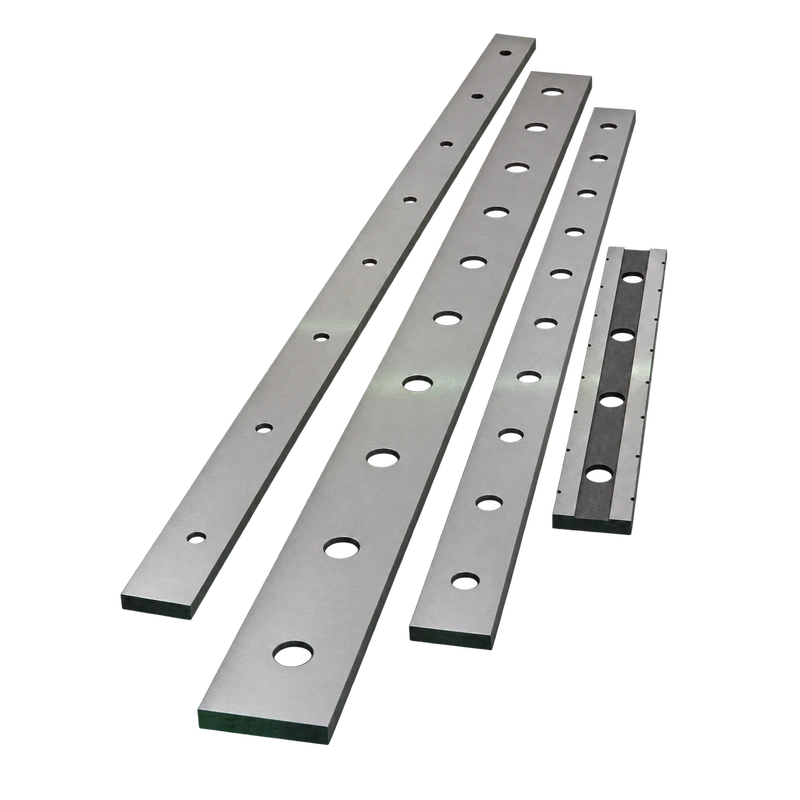
Common Standard Dimensions
Machine cutting capacity is a reference, not a unique model or fit guarantee. Confirm upper and lower knife positions, segment order and mounting holes for the listed configurations.
Scroll horizontally to view all columns.
| Item No. | Machine cutting capacity (mm) | Knife length (mm) | Width (mm) | Thickness (mm) | Pcs / set |
|---|---|---|---|---|---|
| SR003201 | 4 × 2500 | 508 | 80 | 25 | 10 |
| SR003202 | 4 × 2500 | 1300 | 63 | 16 | 4 |
| SR003203 | 6 × 2500 | 1300 | 80 | 20 | 4 |
| SR003204 | 6 × 3200 | 1100 | 80 | 20 | 6 |
| SR003205 | 6 × 4000 | 1025 | 80 | 20 | 8 |
| SR003206 | 16 × 2500 | 1300 | 100 | 25 | 4 |
| SR003207 | 16 × 3200 | 1100 | 100 | 25 | 6 |
| SR003208 | 16 × 4000 | 1025 | 100 | 25 | 8 |
Request a quote for your knife configuration
Include the shear model, upper and lower drawings, sheet grade and thickness, and required quantity.
Compatible Machine Brands
Equip your sheet-metal shear with replacement upper and lower knives, supplied as single-piece blades or segmented sets. Sureay offers drawing-based dimensions and steel options for your cutting duty; contact us for a quotation for your machine. Machine brands are compatibility references for Sureay aftermarket parts.
Engineering Advantages
Tool-Steel Options for Sheet-Metal Cutting
Sureay offers D2, 6CrW2Si, 9CrSi and high-carbon tool steel, with listed hardness of 55–62 HRC depending on the grade. Specify the sheet strength, thickness range and edge-wear conditions when comparing replacement materials.
Single-Piece and Segmented Knife Sets
Upper and lower knives are available as individual pieces or segmented sets, with lengths, end faces and mounting details specified for the existing cutting beam.
Custom Mounting Patterns and Usable Edges
Custom hole patterns and cutting profiles support replacement of the installed knife configuration. One-, two- and four-edge versions are available according to the knife design and its permitted indexing positions.
Related Blades & Parts
View All →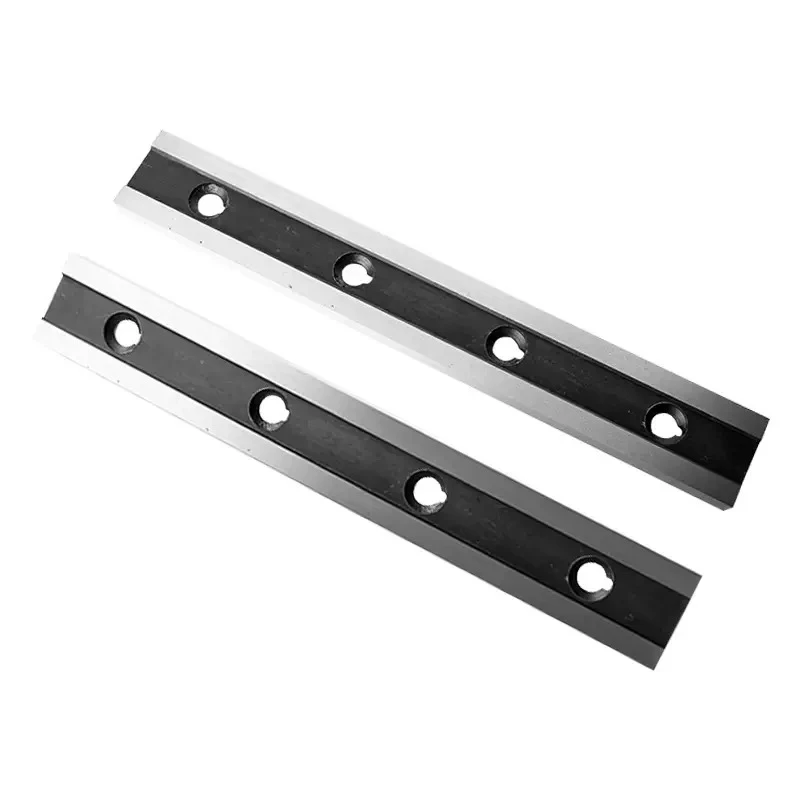
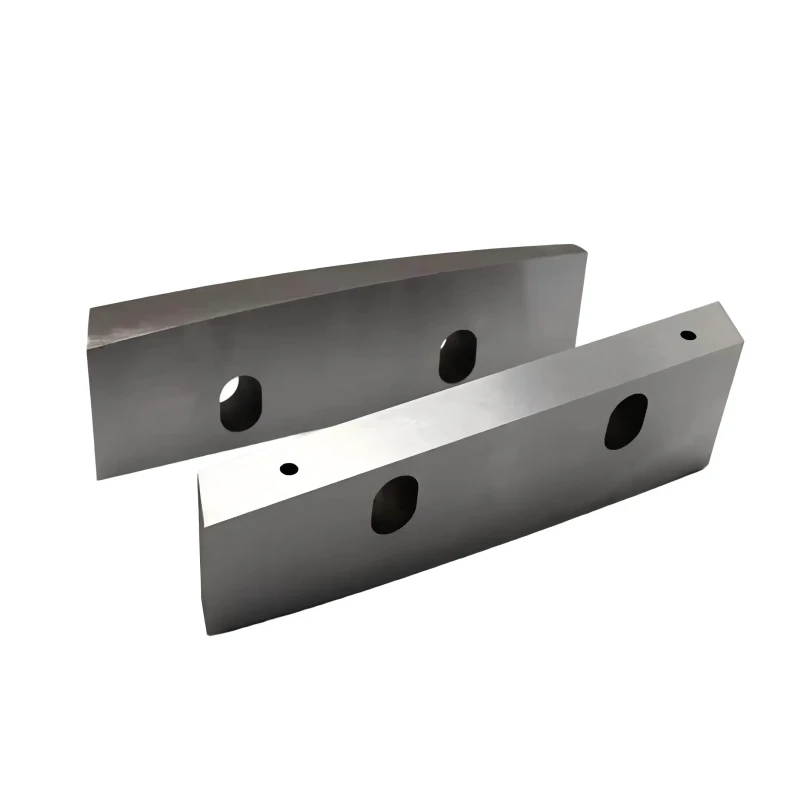
Technical FAQs
01How do I identify a replacement guillotine shear blade?
+−
How do I identify a replacement guillotine shear blade?
The upper or lower knife drawing identifies the replacement more reliably than the shear's advertised cutting width. Compare the actual length, section, bolt holes, locating faces and working edge. On a segmented beam, match the individual piece and its position in the row.
02How should blade material be chosen for mild steel, stainless steel or aluminium?
+−
How should blade material be chosen for mild steel, stainless steel or aluminium?
Start with the actual sheet grade, strength, thickness range and used knife's condition. Gradual wear, edge chipping and deformation call for different material considerations. Compare the current material with the available steel options while retaining the required edge geometry. A change in sheet specification may also require reviewing the machine's cutting settings.
03Why do sheet-metal shear blades chip?
+−
Why do sheet-metal shear blades chip?
Inspect the working edge and compare the damage with the sheet specification and cutting clearance. Mechanical overload, an unsuitable clearance or unintended double layers can contribute to chipping. A worn or damaged edge can affect the finished cut. Check these conditions together before deciding whether to change the knife material or replace a damaged segment.
04Are squaring shear knives and guillotine shear blades the same?
+−
Are squaring shear knives and guillotine shear blades the same?
Yes, in sheet-metal equipment both names can refer to straight upper and lower knives for a transverse cut. Match the knife to the machine's upper or lower beam. For a knife that cuts a clamped stack of paper, see Paper Guillotine Knives.
05What is the difference between blade clearance and rake angle?
+−
What is the difference between blade clearance and rake angle?
Clearance is the gap between the opposing cutting edges. Rake angle describes their relative inclination along the cut. Both affect cutting conditions, but they are separate settings. Use the shear manufacturer's procedure for the sheet grade and thickness, and retain those requirements when specifying replacement knife geometry.
06Can a guillotine shear blade be turned or reground?
+−
Can a guillotine shear blade be turned or reground?
A shear blade can be indexed if the knife and holder support another working edge. It can be reground if the specified profile can be restored within the permitted remaining dimensions. After either operation, check seating, cutting height and clearance against the original drawing and machine limits.
07How do I request a quote for guillotine shear blades or a segmented set?
+−
How do I request a quote for guillotine shear blades or a segmented set?
Share the shear model, upper and lower drawings or part numbers, sheet grades and thicknesses, and quantities. For a segmented row, label the segment sequence and show the adjoining faces. If you're replacing only part of the row, identify the segments staying in service.
Get in Touch with Our Engineers
Contact Our Team
Discuss your requirements directly with our engineers.