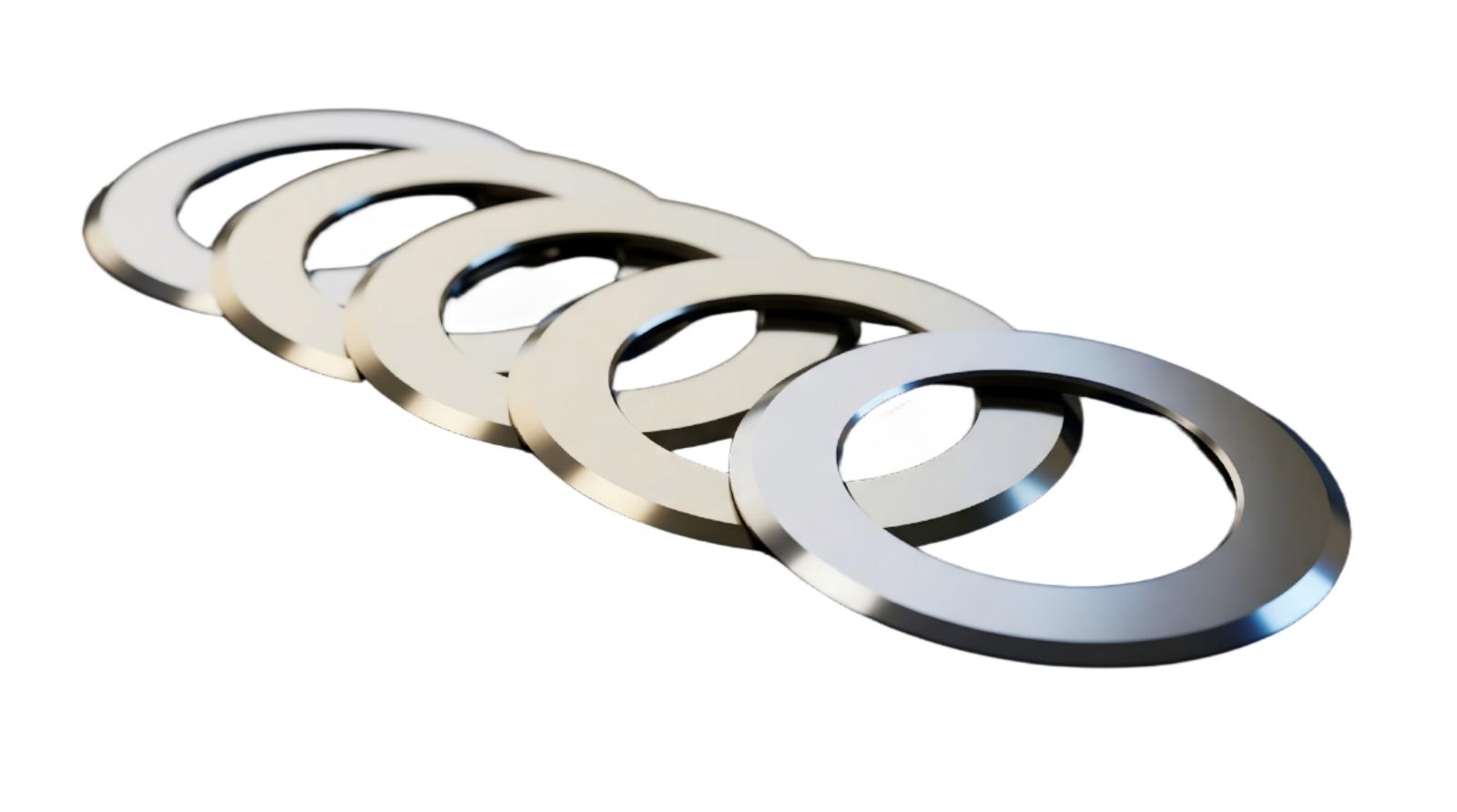
Tungsten Carbide Circular Slitting Knives for Lithium Battery Electrode Foil
Battery Precision Blades
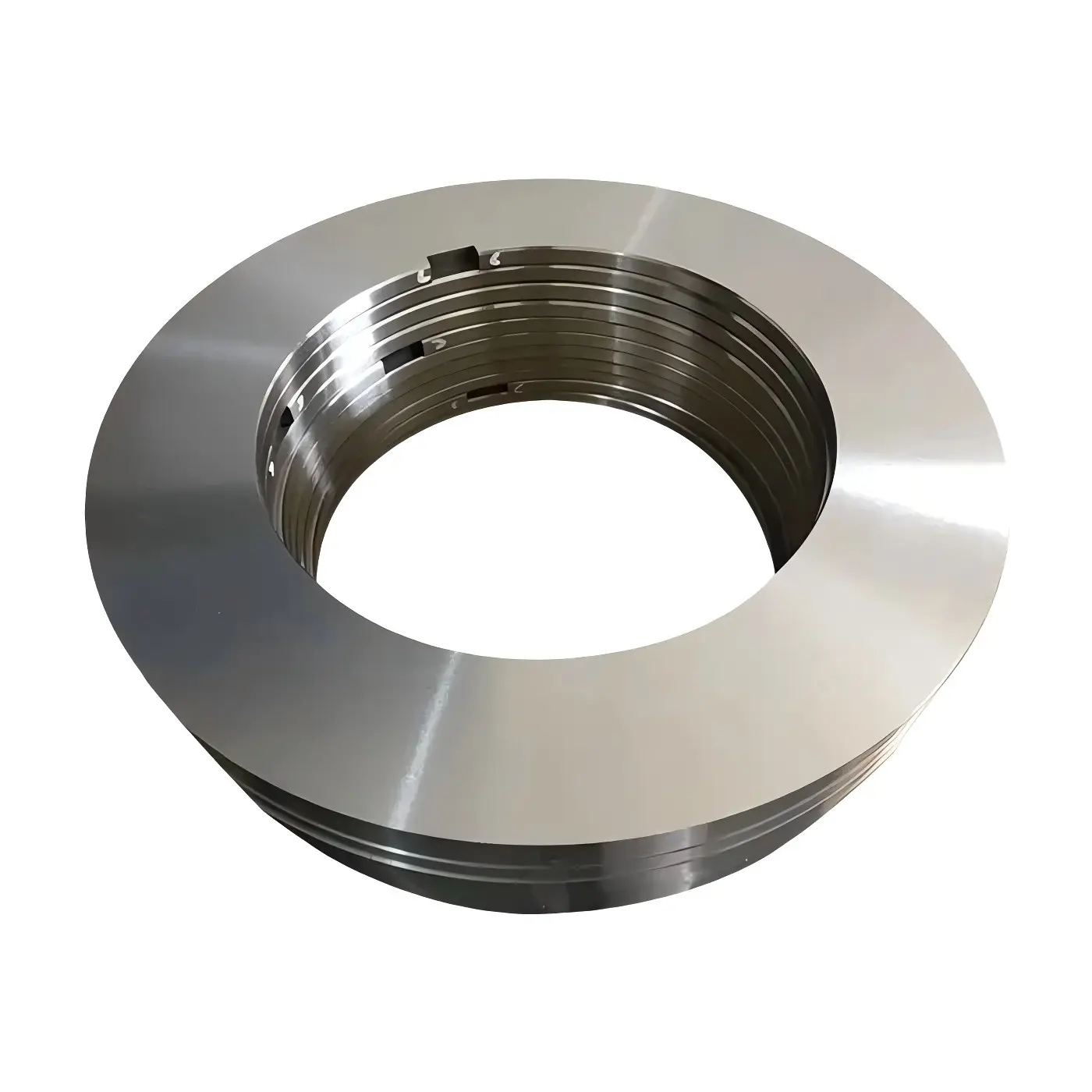
Mirror-finish tungsten carbide circular slitting knives for lithium-ion battery electrode foil. Zero-notch Ra ≤ 0.05μm edge quality prevents micro-burrs on Al cathode and Cu anode foil, maintaining ISO Class 7 cell assembly cleanliness. Tolerance: ±0.001mm thickness, ≤0.01mm T.I.R.
- ■Material: Ultra-fine WC-Co Tungsten Carbide, Cermet (on request)
- ■Application: Al cathode foil (12–20μm), Cu anode foil (6–12μm), PVDF separator film
■ ISO 9001:2015 Certified
■ In-House Heat Treatment
■ Strict Dimensional Tolerances
■ Global Door-to-Door Delivery
[ Engineering Reference ]
Decisive Specifications
| Material | Ultra-fine WC-Co Tungsten Carbide, Cermet (on request) |
|---|---|
| Surface Finish | Mirror polish Ra ≤ 0.05μm — zero-notch edge |
| Tolerance | Thickness: ±0.001mm | T.I.R. Runout: ≤0.01mm |
| Hardness | HRA 91–93 (WC-Co grade) |
| Coatings | DLC, TiN (optional, anti-adhesion for PVDF-coated foil) |
| Application | Al cathode foil (12–20μm), Cu anode foil (6–12μm), PVDF separator film |
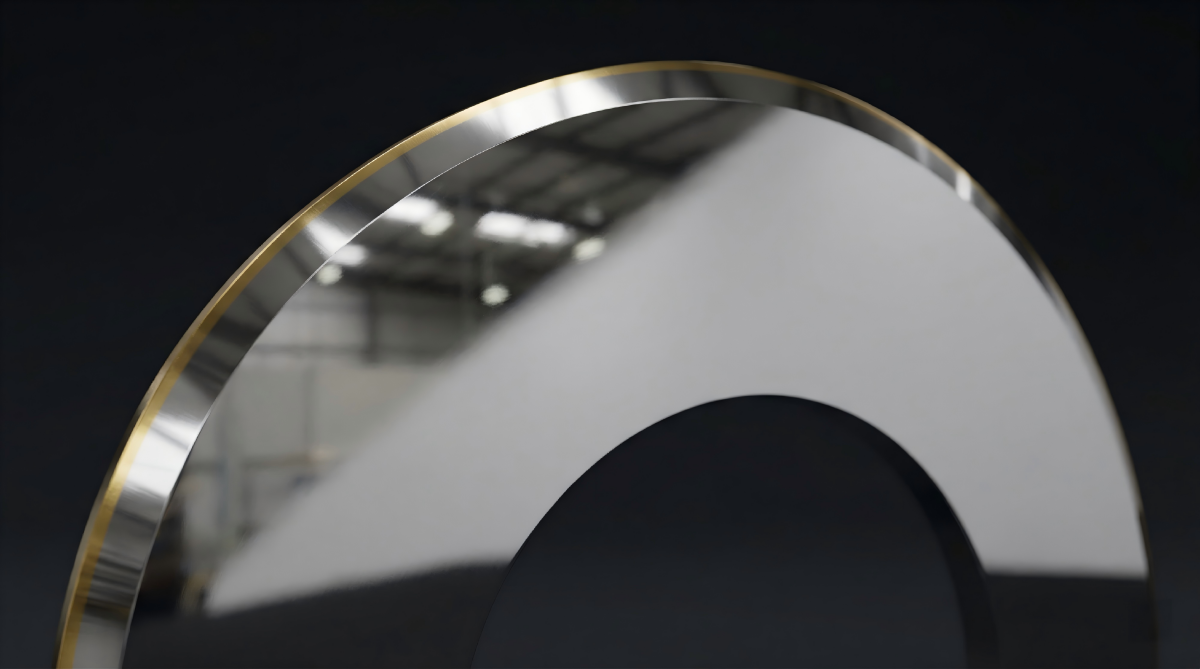
■ All values verified via CMM inspection · ISO 9001:2015
[ RFQ Prompt ]
Need a Specific Size or OEM Replacement?
Don't see your exact specs? Send us a blueprint, a worn sample, or just your machine model. Our team will review the details and provide a tailored quotation.
[ Standard Reference ]
Common Standard Dimensions
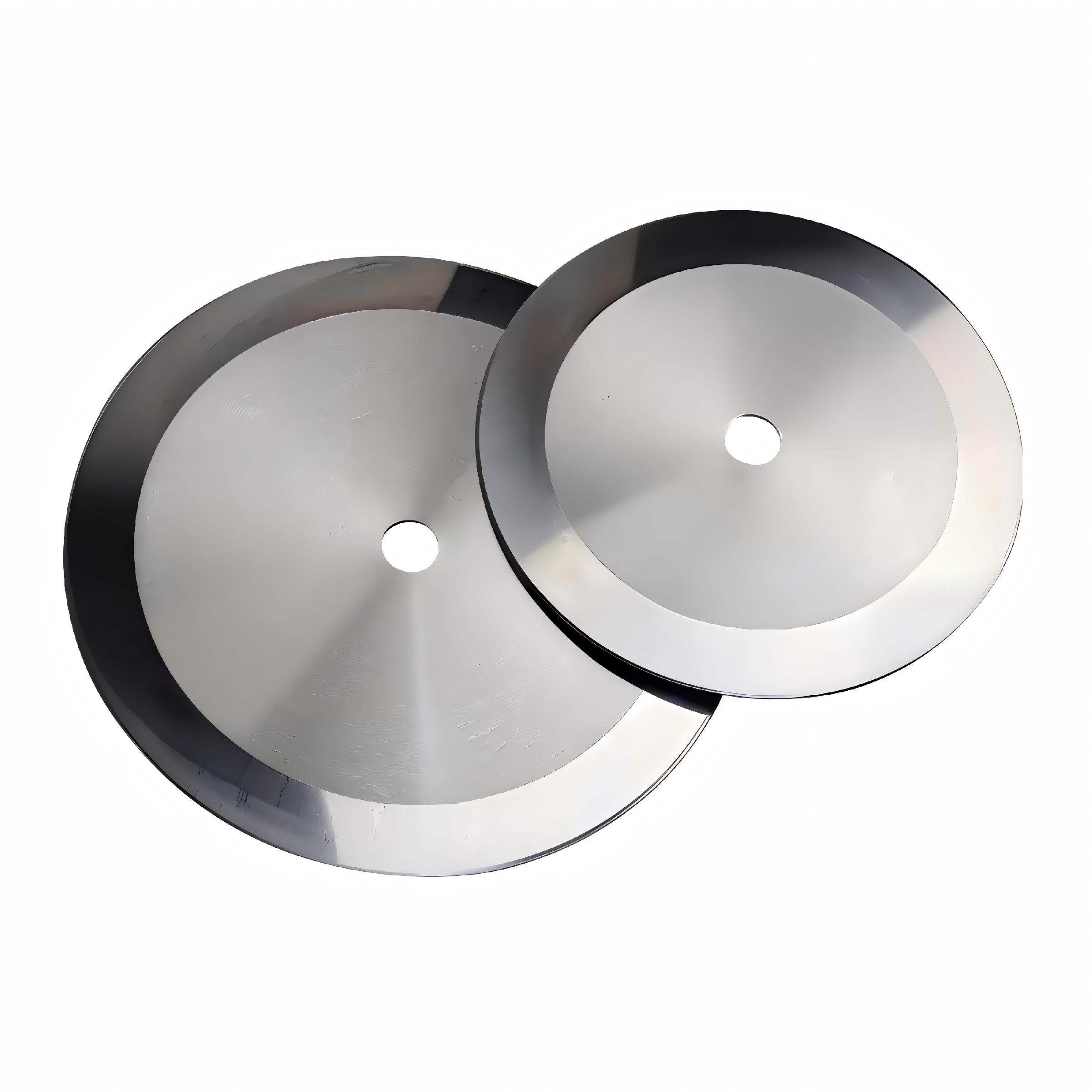
| Outer Diameter (OD) | Inner Diameter (ID) | Thickness |
|---|---|---|
| 76 mm | 38 mm | 0.5 mm |
| 76 mm | 38 mm | 1.0 mm |
| 100 mm | 50 mm | 0.5 mm |
| 100 mm | 50 mm | 1.0 mm |
| 100 mm | 50 mm | 1.5 mm |
| 120 mm | 60 mm | 0.5 mm |
| 120 mm | 60 mm | 1.0 mm |
| 150 mm | 76 mm | 1.0 mm |
[ OEM Compatibility ]
Compatible Machine Brands
® Registered trademarks are property of their respective owners. Sureay supplies compatible replacement blades — not OEM-branded parts.
[ Technical Audit ]
Engineering Advantages
Zero-Notch Mirror Finish
Every cutting bevel is lapped to Ra ≤ 0.05μm — the same surface quality standard used for optical lens grinding. This eliminates the micro-notching that generates metallic particles in dry-room cell assembly environments and prevents separator membrane puncture.
Ultra-Fine WC-Co Carbide Grade
Standard industrial carbide uses grain sizes of 1–3μm. Our battery-grade knives are manufactured from ≤0.5μm submicron WC-Co, providing dramatically higher edge hardness (HRA 91–93), superior abrasion resistance on thin Al and Cu foils, and a longer polishable service life between regrinding cycles.
Pre-Verified Clearance Pairs
Upper and lower knife sets are ground as matched diameter pairs with clearance pre-verified to your winding machine specification (typically 0.002–0.005mm for Cu foil). Each pair ships with an engineering data sheet recording OD, ID, thickness, and measured clearance, enabling consistent line-side reinstallation.
[ System Inventory ]
Related Blade Categories
View All →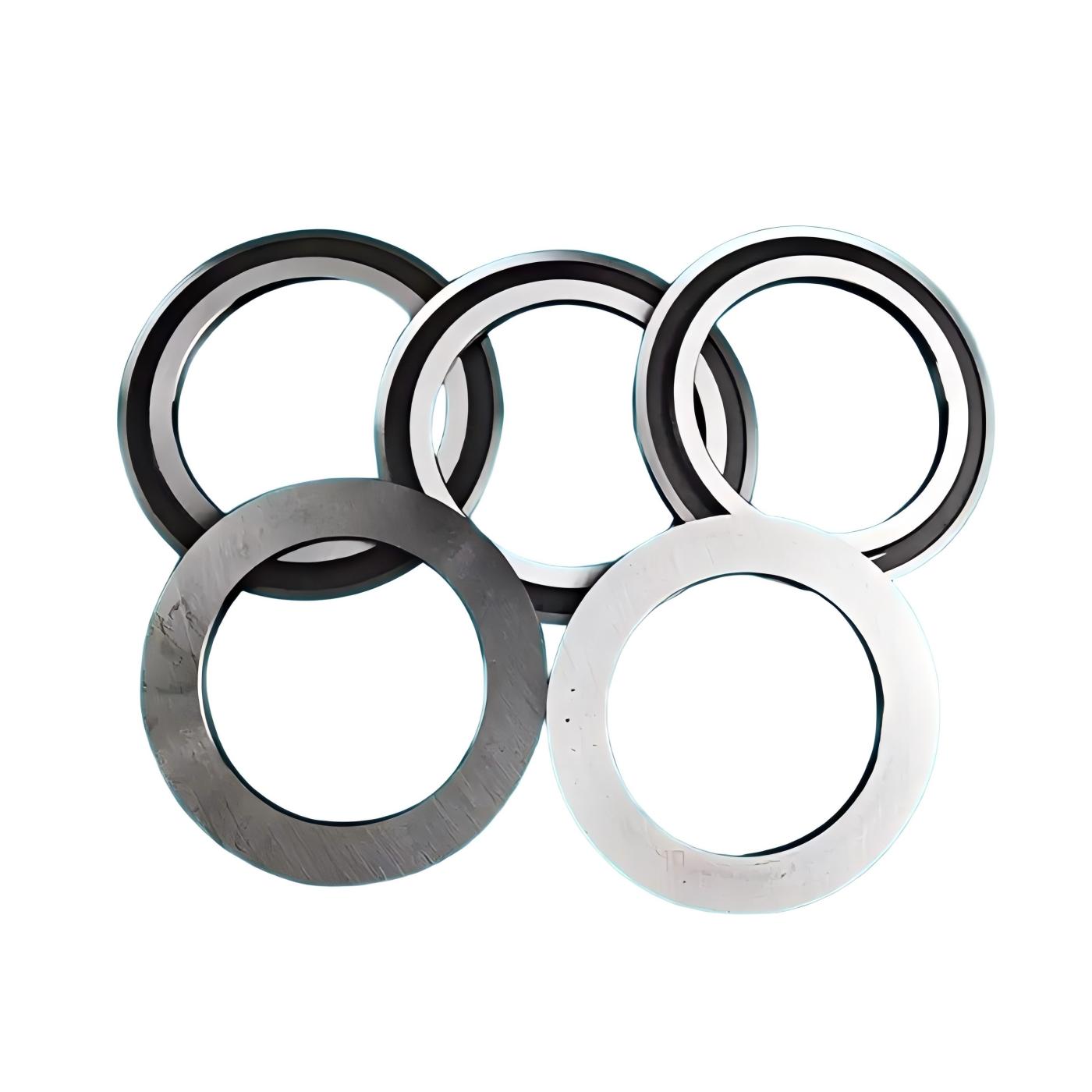
[ Knowledge Base ]
Product FAQs & Buying Guidance
Technical FAQs
01What surface finish standard is required to prevent micro-burrs on battery electrode foil?
+−
What surface finish standard is required to prevent micro-burrs on battery electrode foil?
For lithium-ion battery electrode slitting, the cutting bevel must be polished to Ra ≤ 0.05μm (mirror finish) and verified for zero notches under 400× magnification. Any surface irregularity above this threshold generates micro-metallic particles that contaminate ISO Class 7 dry-room environments and can penetrate the separator, causing internal short-circuit in the finished cell.
02How do I set the knife-to-knife clearance for ultra-thin copper anode foil?
+−
How do I set the knife-to-knife clearance for ultra-thin copper anode foil?
For 6–12μm Cu anode foil, the upper/lower knife clearance should be set at 0.002–0.005mm (2–5% of foil thickness). Clearance below this range causes burr formation; above it results in foil wrinkling and rewind telescoping. Our matched pairs are pre-verified to your specified clearance and supplied with a dimensional data sheet for consistent line-side installation.
03What carbide grade should I specify for aluminum cathode foil vs. copper anode foil?
+−
What carbide grade should I specify for aluminum cathode foil vs. copper anode foil?
Both foil types benefit from submicron WC-Co (≤0.5μm grain, HRA 91–93). For Al cathode foil, the hard oxide surface layer is the primary abrasion driver — a standard K10/K20 carbide grade provides acceptable edge life. For Cu anode foil, the priority shifts to achieving the lowest possible surface roughness (Ra ≤ 0.05μm) to prevent adhesive transfer and foil marking at the cut edge.
04What is the typical regrinding cycle on battery slitting knives?
+−
What is the typical regrinding cycle on battery slitting knives?
On a standard 600mm-wide foil slitting line running 80 m/min, submicron WC-Co knives typically sustain acceptable edge quality for 4–6 months of continuous operation before regrinding is required. Edge degradation appears first as increased cut-edge roughness (Ra climbing above 0.1μm) visible under SEM inspection, not as catastrophic chipping. We offer a regrinding service with full dimensional re-certification.
Why Choose Sureay
01Can Sureay supply battery slitting knives certified to IATF 16949 requirements?
+−
Can Sureay supply battery slitting knives certified to IATF 16949 requirements?
Yes. We supply full material traceability documentation for EV battery supply chain qualification: WC-Co raw material mill certificates, hardness test reports (HRA per ASTM E18), surface roughness measurement records (Ra per ISO 4287), and dimensional CMM reports. All documentation is referenced to your purchase order batch number.
02What is the lead time for standard and custom battery slitting knife orders?
+−
What is the lead time for standard and custom battery slitting knife orders?
Standard stock dimensions: 3–5 working days. Custom OD/ID dimensions not held in stock: 10–15 working days including full QC documentation. For initial OEM qualification orders requiring sample verification before full production, allow 7–10 working days for first-article samples.
Reach Our Team
Get in Touch with Our Engineers
Contact Our Team
Discuss your requirements directly with our engineers.
Request a Quote
Our engineering team responds within 2 hours.