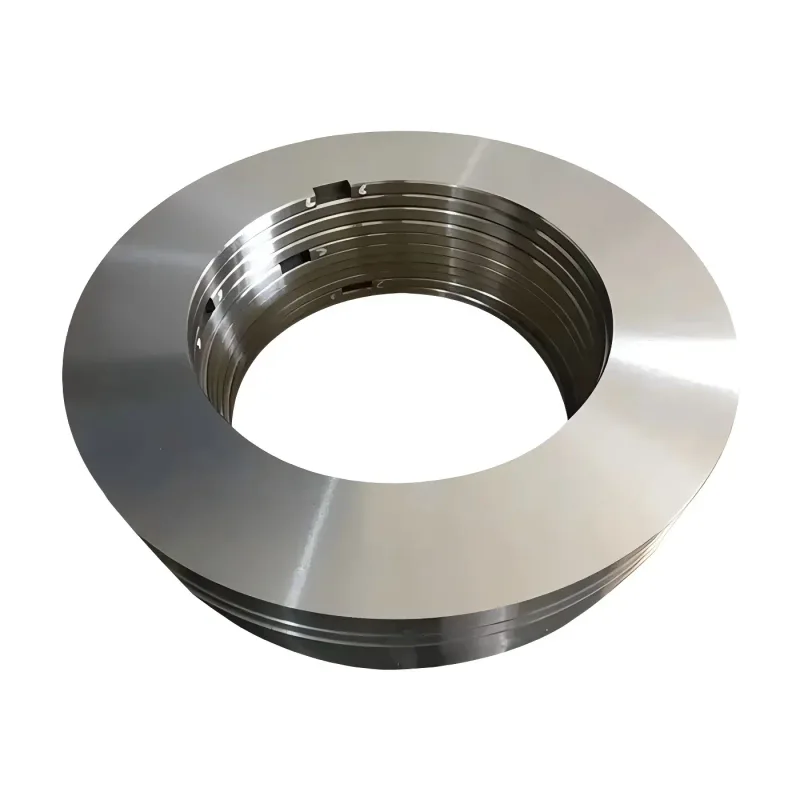
Steel Coil Slitting Knives & Rotary Shear Tooling
- ■Sizes: Rotary shear OD 80–680 mm
- ■Material: D2, SKD11, Cr12MoV, H13, 6CrW2Si, DC53, M2, PM HSS or WC-Co carbide
- ■Application: Cold-rolled, hot-rolled, stainless and high-strength coil
Technical Specifications
- Sizes: Rotary shear OD 80–680 mm
- Material: D2, SKD11, Cr12MoV, H13, 6CrW2Si, DC53, M2, PM HSS or WC-Co carbide
- Applications: Cold-rolled, hot-rolled, stainless and high-strength coil
- Surface finish: Mirror-lapped faces, Ra ≤0.2 μm
- Bore fit: H7 for the listed H7 model. Other fits to drawing.
- Typical hardness: D2 58–62 HRC · H13 54–58 HRC for ambient plate slitting · PM HSS 64–66 HRC
- Precision options: For OD up to 420 mm, ±0.001 mm thickness and 0.002 mm face parallelism. Other sizes to drawing.
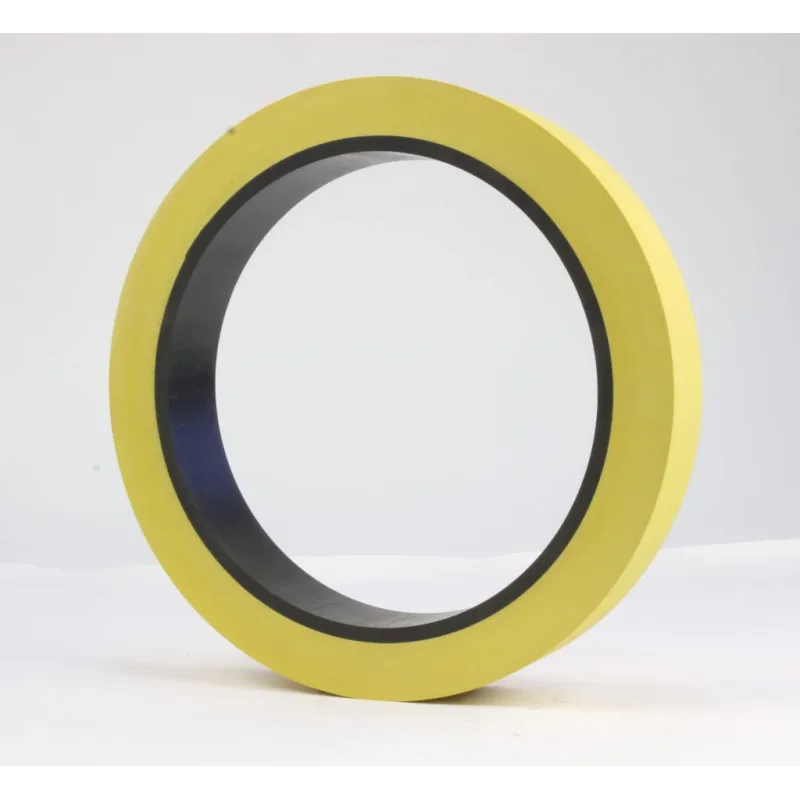
- Tooling: Spacers, stripper rings and overarm separator discs
- Mounting: Solid arbor with a plain or keyed bore
Common Standard Dimensions
| Item No. | Dimensions (OD × ID × W) | Line class |
|---|---|---|
| SR001301 | 200 × 120 × 10 mm | Light gauge |
| SR001302 | 200 × 120 × 12 mm | Light gauge |
| SR001303 | 250 × 150 × 12 mm | Service center |
| SR001304 | 250 × 150 × 15 mm | Service center |
| SR001305 | 300 × 200 H7 × 12 mm | Medium-duty |
| SR001306 | 315 × 200 × 15 mm | Cold / hot rolled |
| SR001307 | 315 × 200 × 20 mm | Cold / hot rolled |
| SR001308 | 400 × 260 × 25 mm | Hot rolled |
| SR001309 | 500 × 320 × 40 mm | Heavy plate |
| Item No. | Dimensions (OD × ID × W) | Construction |
|---|---|---|
| SR001331 | 150.1 × 95 × 6.35 mm | Solid carbide |
| SR001332 | 181 × 125 × 9.5 mm | Solid carbide |
| SR001333 | 204 × 125 × 10 mm | Solid carbide |
| SR001334 | 250 × 125 × 10.1 mm | Solid carbide |
| SR001335 | 300.15 × 160 × 28 mm | Solid carbide |
| Item No. | Component | Function | Selection inputs |
|---|---|---|---|
| SR001341 | Spacers | Set cutting positions | Width, bore and stack fit |
| SR001342 | Stripper rings | Support and release strip | Steel or bonded elastomer, hardness and width |
| SR001343 | Separator discs | Guide separated strips | Overarm bore, OD and edge form |
| Item No. | Dimensions (OD × ID × W) | Application |
|---|---|---|
| SR001818 | 400 × 260 × 20 mm | Heavy gauge hot-rolled steel |
| SR001819 | 500 × 320 × 30 mm | Heavy plate |
Need a size that is not listed?
Send a drawing, a worn sample, or just your machine model. We reply with a quotation within 24 hours.
Compatible Machine Brands
Order steel coil slitting knives with the spacers, stripper rings and separator discs needed for your line. Sureay offers grade options, custom bores and tooling widths; send your drawings and slit schedule for a coordinated quotation.
Engineering Advantages
Steel Grades for Different Coil Loads
Sureay offers tool-steel and PM-steel configurations for different coil grades and processing loads, allowing replacement knife orders to reflect the strip specification and observed wear or chipping.
Ground Dimensions for Knife and Spacer Stacks
Replacement knives are ground to the specified width and face geometry for your coil-slitting stack, with matching spacer dimensions coordinated to the same tooling layout.
Slitting Knives with Companion Tooling
Source slitting knives, spacers, stripper rings and separator discs in one enquiry, with the required components and quantities arranged around your coil-line tooling layout.
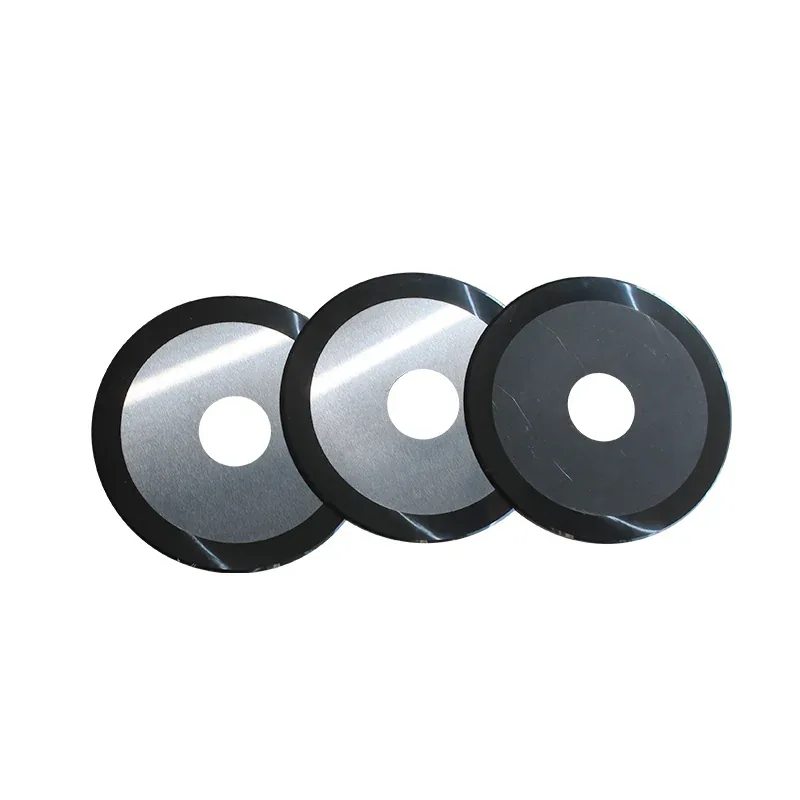
Related Blades & Parts
View All →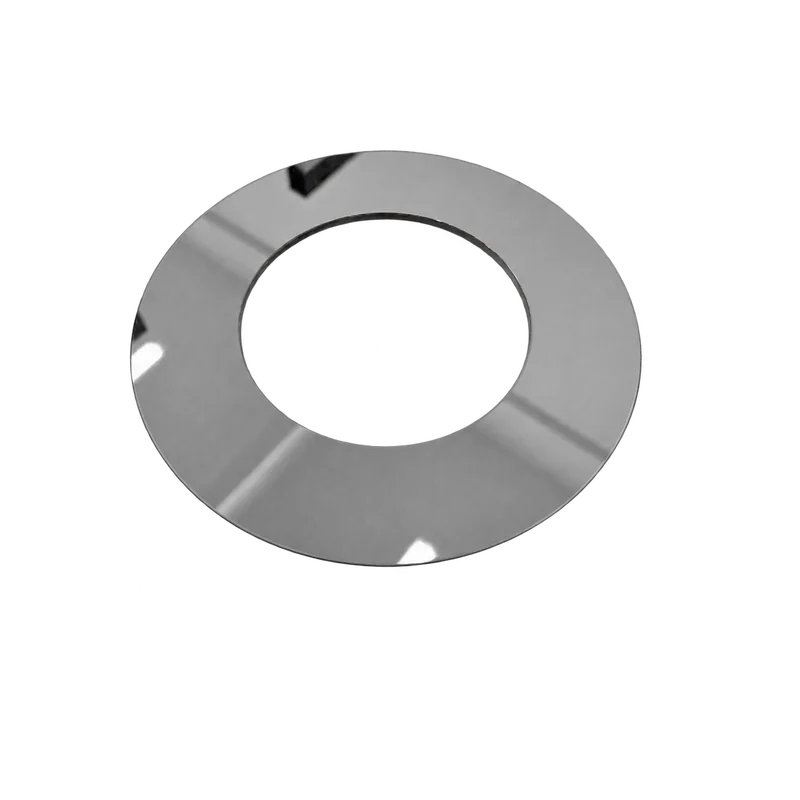
Technical FAQs
01What identifies a replacement steel coil slitting knife?
+−
What identifies a replacement steel coil slitting knife?
Outside diameter, bore, axial width and arbor interface establish the basic fit. Include the strip grade, thickness and retained tooling. Rotary shear knives are the circular knives used for longitudinal coil slitting; straight shear knives cut across the strip, while Scrap Chopper Blades cut the edge trim into shorter pieces.
02How do coil strength and blade damage affect knife material selection?
+−
How do coil strength and blade damage affect knife material selection?
Consider strip strength, thickness and processing conditions alongside the used knife's condition. Gradual abrasion and edge chipping present different material-selection questions. Comparing the coil specification and current wear pattern with the existing tooling helps define the replacement requirement, including the balance between wear resistance and resistance to edge damage.
03Why do coil slitting knives chip instead of wearing gradually?
+−
Why do coil slitting knives chip instead of wearing gradually?
Chipping can indicate mechanical overload. Incorrect horizontal clearance, excessive overlap, deformed tooling or a fatigued cutting edge can contribute. Knife material and hardness also affect the result. Check the damaged position, retained tooling and grinding history against the actual strip grade and thickness before deciding whether the setup or replacement material needs to change.
04What causes burrs or uneven slit edges on a coil line?
+−
What causes burrs or uneven slit edges on a coil line?
Blade wear or chipping, knife clearance, overlap, arbor condition and changes in the strip grade can all contribute. Compare the defect's position and direction across the slit pattern. That record helps determine whether it follows one knife, a particular tooling setup or a change in the material being processed.
05How should knife and spacer tolerances be specified for a complete stack?
+−
How should knife and spacer tolerances be specified for a complete stack?
Define permitted variation for individual widths and for the completed stack. Bore fit, face condition and parallelism also affect assembly. The catalog precision options apply to knives up to 420 mm outside diameter; other sizes are specified to drawing. Record retained components alongside the replacements so the complete arrangement has clear dimensional requirements.
06Can Sureay supply knives, spacers, stripper rings and separator discs together?
+−
Can Sureay supply knives, spacers, stripper rings and separator discs together?
Yes. These four tooling types can be included in the same quotation. The slit-width schedule and component drawings define their arrangement. List the quantity of each configuration and identify which existing parts will remain in use, allowing the replacement widths, interfaces and working diameters to be considered as part of one assembly.
07How do I compare the cost of different coil slitter knife materials?
+−
How do I compare the cost of different coil slitter knife materials?
Compare cost per acceptable tonne or metre under the same coil grade, gauge, slit pattern and edge-quality requirements. Include knife purchase, regrinding, changeover time and scrap, using recorded output between knife changes. Apply the same accounting period to each option so changes in production conditions are separated from differences in knife performance.
Get in Touch with Our Engineers
Contact Our Team
Discuss your requirements directly with our engineers.