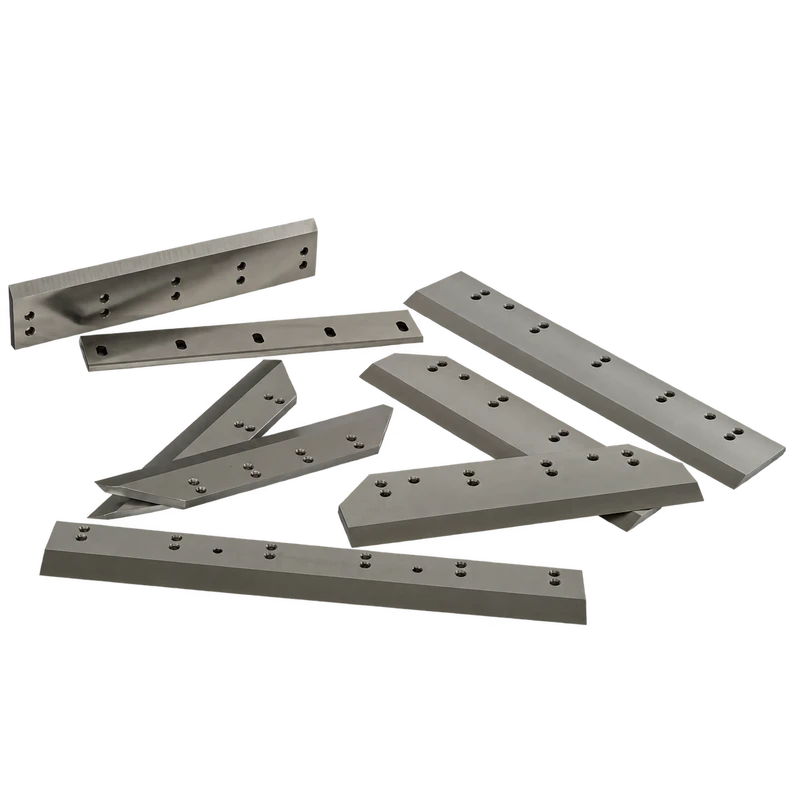
Saddle Stitcher Trimmer Knives
- ■Sizes: 280–400 mm
- ■Material: Tool steel, HSS or carbide-tipped cutting edges
- ■Application: Trimming stitched booklets, brochures and magazines
Technical Specifications
- Sizes: 280–400 mm
- Reference configurations: Müller Martini DS 304 / Tempo knife positions listed below
- Knife positions: Front upper, side upper, front lower and side lower; left- and right-hand knives
- Material options: Tool steel, HSS or carbide-tipped cutting edges
- Application: Trimming stitched booklets, brochures and magazines
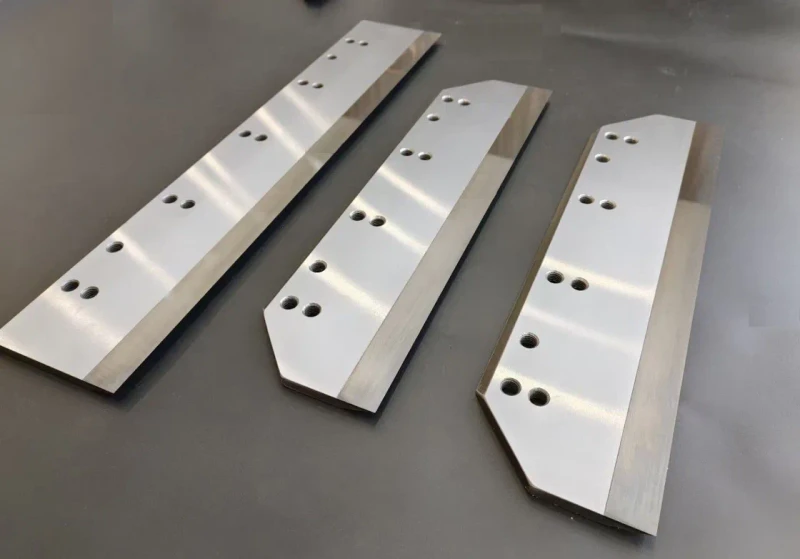
Common Standard Dimensions
DS 304 / Tempo reference dimensions follow the DIENES paper-knife catalogue, page 34. Left and right upper knives have separate Item No. entries even where their outside dimensions match. Confirm the full hole pattern and knife drawing; other machine versions are made to drawing.
Scroll horizontally to view all columns.
| Item No. | Machine / position | Length (mm) | Width (mm) | Thickness (mm) |
|---|---|---|---|---|
| SR004201 | DS 304 / Tempo · front upper | 390 | 60 | 8 |
| SR004202 | DS 304 / Tempo · side upper, right | 280 | 60 | 8 |
| SR004203 | DS 304 / Tempo · side upper, left | 280 | 60 | 8 |
| SR004204 | DS 304 / Tempo · front lower | 400 | 40 | 15 |
| SR004205 | DS 304 / Tempo · side lower | 295 | 32 | 15 |
Request a quote for your knife configuration
Send the saddle stitcher/trimmer model, version, position-labelled knife drawings, stock and booklet thickness, and quantities.
Compatible Machine Brands
Order front, side, upper or lower saddle-stitcher trimmer knives from Sureay, including individual replacements and custom knife profiles. Tool steel, HSS and carbide-tipped options are available; send your position-labelled drawings for a quotation tailored to your stitching line. Machine brands are compatibility references for Sureay aftermarket parts.
Engineering Advantages
Tool Steel, HSS and Carbide-Tipped Edges
Material options for booklet and magazine trimming allow replacement orders to reflect the paper stock, cutting duty and edge wear on the existing line.
Front, Side, Upper and Lower Knife Positions
Listed knife lengths span 280–400 mm. Sureay supplies front and side positions in upper, lower, left- and right-hand configurations so buyers can order the parts needed for their trimmer.
Custom Profiles for Existing Stitching Lines
Drawing-defined bodies, bevels and mounting holes support replacement of existing knives, with special profiles specified together with their mating parts and installed orientation.
Related Blades & Parts
View All →
Technical FAQs
01How do I identify replacement knives for a saddle-stitching line?
+−
How do I identify replacement knives for a saddle-stitching line?
Identify the stitcher and trimmer version, then specify front or side, upper or lower, and left or right where relevant. The original reference and mounting drawing distinguish the positions. Include bevel direction and installed orientation so the replacement follows the actual knife arrangement used for your booklets or magazines.
02Can I replace just one damaged side knife?
+−
Can I replace just one damaged side knife?
Yes. A side knife can be supplied separately when its position and mounting are identified. Inspect the retained mating knife and record its dimensions and regrinding history. Use the left- or right-hand part reference with the upper or lower position, because those features determine which replacement is required.
03How should knife material be chosen for coated booklet stock?
+−
How should knife material be chosen for coated booklet stock?
Compare the existing edge wear with the paper coating, booklet thickness and production duty. Gradual abrasion and edge chipping call for different material considerations. The available grinding process also affects the choice of tool steel, HSS or carbide-tipped construction. Keep the specified bevel and mounting geometry with the material requirement.
04Do the listed knives cover every Müller Martini DS 304 / Tempo configuration?
+−
Do the listed knives cover every Müller Martini DS 304 / Tempo configuration?
No. The listed Item No. entries cover specific Müller Martini DS 304 / Tempo knife positions and dimensions. Compare the version and original part reference for the front upper, side upper, front lower or side lower knife with the full mounting drawing.
05When should a saddle-stitcher knife be replaced instead of reground?
+−
When should a saddle-stitcher knife be replaced instead of reground?
Remaining knife height and, for inlaid or tipped knives, usable cutting-edge material govern whether the working geometry can be restored. Use the wear limit for that knife construction and the trimmer's adjustment limits. Upper and lower knives can differ in construction, so assess each position separately when deciding which parts require replacement.
06Are saddle-stitcher knives also called three-knife trimmer blades?
+−
Are saddle-stitcher knives also called three-knife trimmer blades?
Sometimes. The terms overlap when a saddle-stitching line trims three sides of a booklet. Identify the stitcher and the exact upper, lower, front or side position when ordering. For separate three-knife sets used on bound book blocks, see Three-Knife Trimmer Blades.
07What should I send for a saddle stitcher trimmer knife quote?
+−
What should I send for a saddle stitcher trimmer knife quote?
Send the stitcher and trimmer model, booklet stock, original part numbers or drawings, and quantities. Label upper or lower, front or side, and left or right where applicable. For a splitter or V-phase arrangement, include the actual profile and the mating knife drawing.
Get in Touch with Our Engineers
Contact Our Team
Discuss your requirements directly with our engineers.