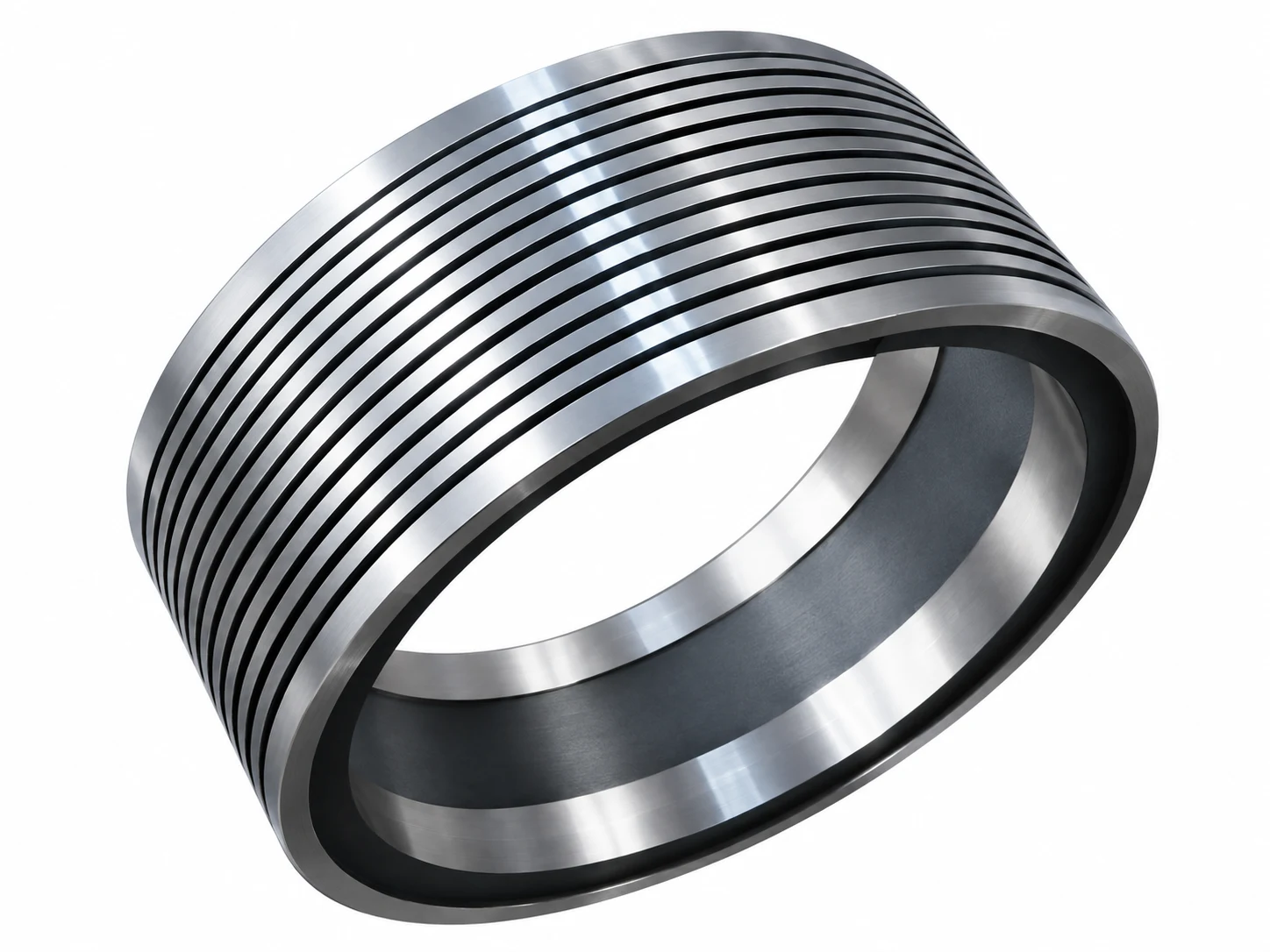
Multi-Groove Bottom Knives & Cutter Rings for Shear Slitting
Slitter Knives
This page covers multi-groove rings that carry many slit positions on one body. For the single-edge circular bottom knives that pair with a top knife on paper rewinders, see Slitter Rewinder Bottom Knives.
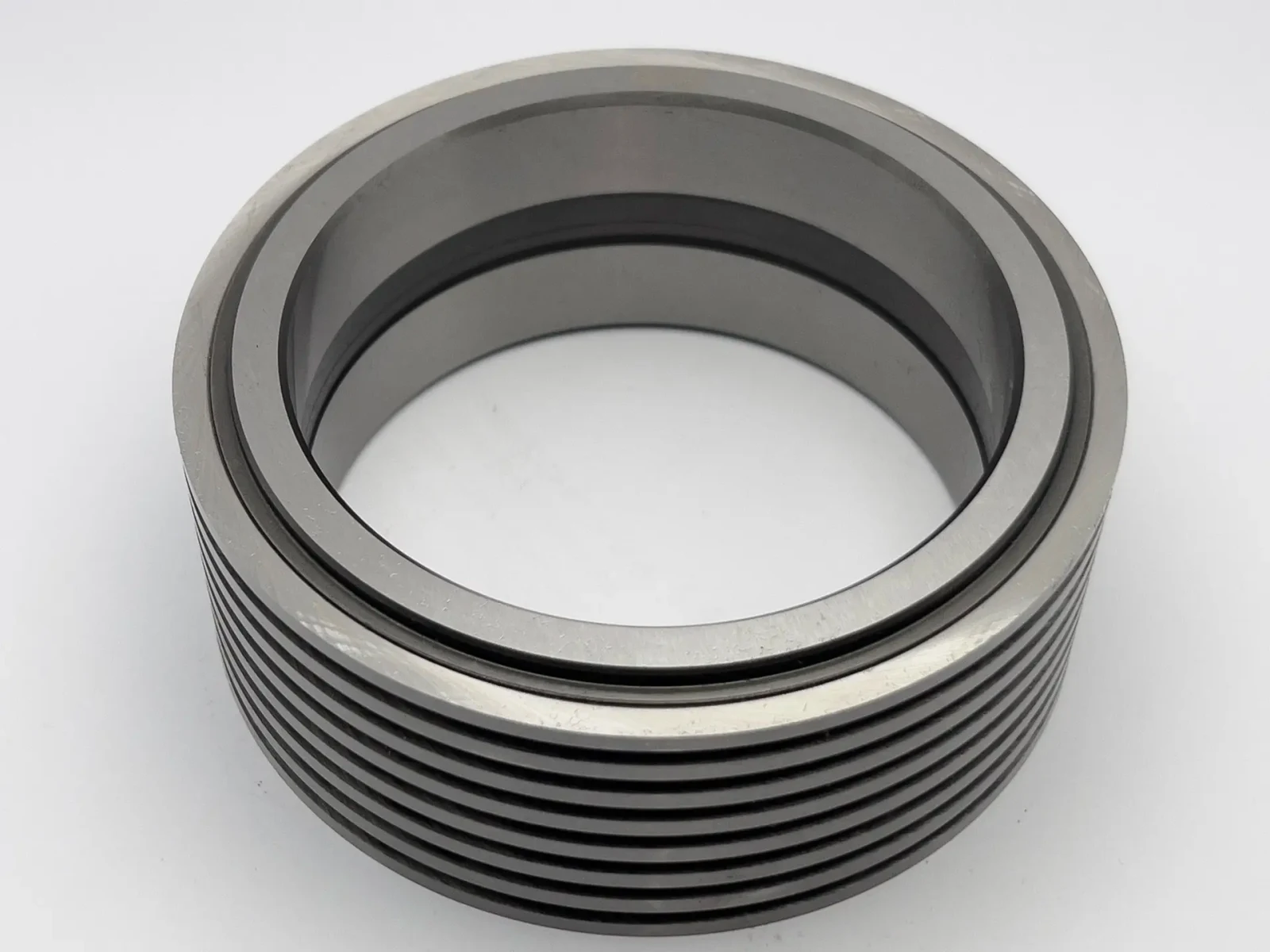
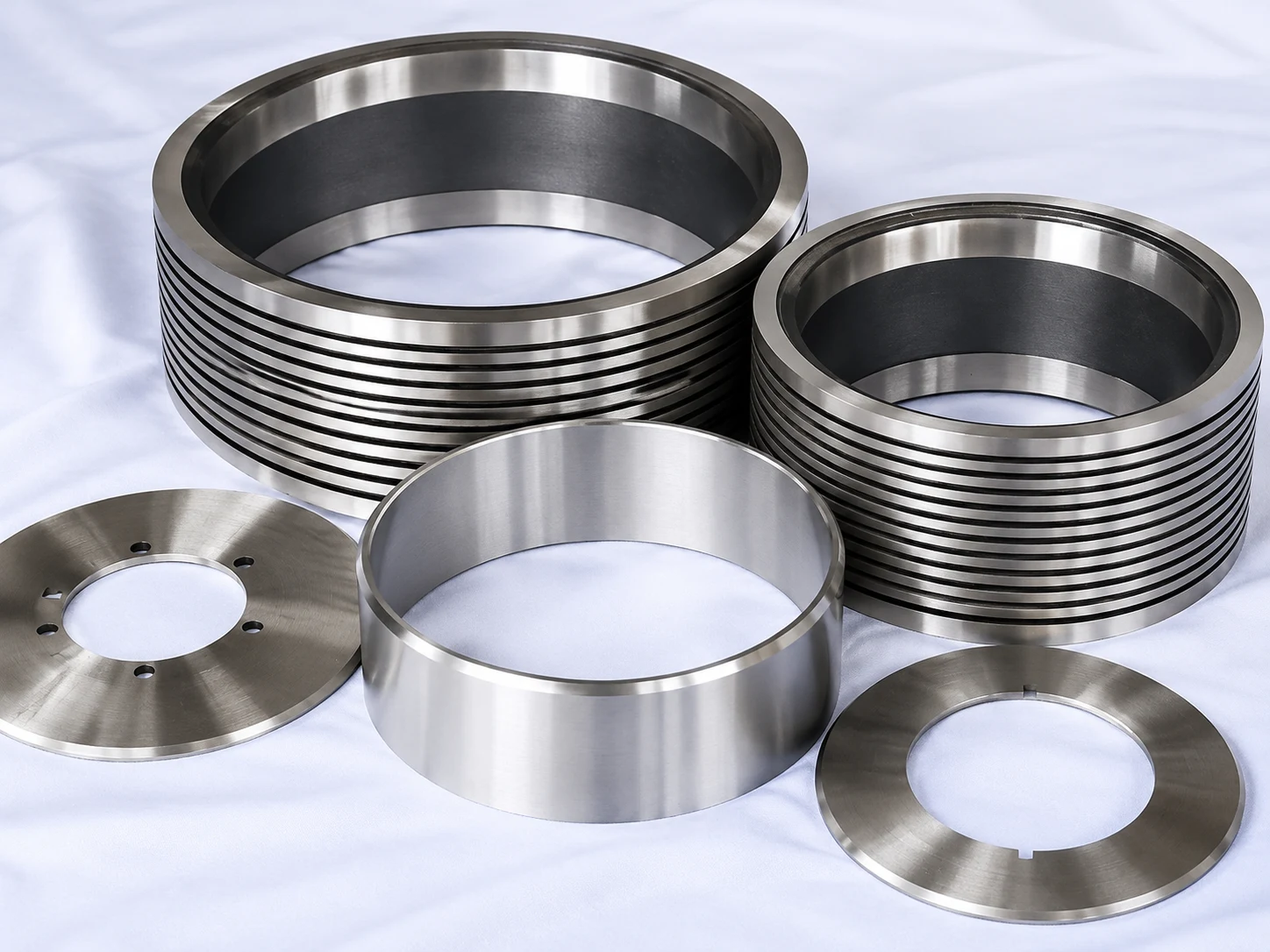
Multi-groove bottom knife rings for shear slitting on paper, board and film rewinders. Slit width is changed by moving the top knife to another groove instead of re-tooling. Groove pitch from 5 mm, OD to Φ406 mm, plain bore for air shafts or set-screw for solid shafts. Single or double cutting edge, one-piece or split ring. Also supplied as single-groove and smooth spacer rings.
- ■Material: Cr12MoV / SKD-11 / 9CrSi / 65Mn / HSS / carbide-tipped
- ■Application: Multi-width shear slitting of paper, board, film, foil and tape
■ ISO 9001:2015 Certified
■ In-House Heat Treatment
■ Strict Dimensional Tolerances
■ Global Door-to-Door Delivery
Groove pitch, groove count and bore are made to your width schedule — there is no meaningful standard size for this product. Send the widths you actually run, the shaft type (air or solid) and the mating top knife, and we grind the groove positions to that schedule.
[ Engineering Reference ]
Decisive Specifications
| Material | Cr12MoV / SKD-11 / 9CrSi / 65Mn / HSS / carbide-tipped |
|---|---|
| Outer Diameter | Up to Φ406 mm (16 in) |
| Groove Pitch | From 5 mm (0.200 in), ground to your width schedule |
| Mounting | Plain bore for expandable air shaft, or set screw for solid shaft |
| Edge Configuration | Single or double cutting edge |
| Construction | One-piece ring or two-piece split ring |
| Application | Multi-width shear slitting of paper, board, film, foil and tape |
■ All values verified via CMM inspection · ISO 9001:2015
[ RFQ Prompt ]
Need a Specific Size or OEM Replacement?
Don't see your exact specs? Send us a blueprint, a worn sample, or just your machine model. Our team will review the details and provide a tailored quotation.
[ Material Selection ]
Which Steel Grade Should You Order?
Grade choice on a multi-groove ring is governed by how abrasive the web is, because the groove edges wear where the web passes rather than where the knife strikes. A ring is also a large, expensive body to scrap, so grades that can be reground repeatedly are usually the better economics.
| Grade | Hardness | Best For | Trade-off |
|---|---|---|---|
| Cr12MoV / SKD-11 | HRC 58–62 | General paper, board and film — the standard specification and the best all-round balance of wear life and regrindability | Outlasted by carbide-tipped on heavily coated or filled stocks |
| 9CrSi / 65Mn | HRC 56–60 | Soft uncoated stocks, tissue and lower line speeds where unit price drives the decision | Groove edges round off sooner, so expect a shorter interval between regrinds |
| HSS | HRC 62–64 | Higher line speeds and mixed job schedules where the ring must hold edge through long runs | Higher cost than tool steel; still wears on filled stocks |
| Carbide-tipped | HRA 89–91 at the tip | Abrasive coated, filled and laminated webs where tool steel grooves wear out in weeks | Highest price, and the tips chip rather than wear if the shaft runs out of true |
If you are unsure, send the substrate and your present regrind interval and we will size the recommendation against your own consumption rather than a generic table.
[ Standard Reference ]
Common Standard Dimensions
| Configuration | Outer Diameter | Mounting | Groove Pitch / Edges |
|---|---|---|---|
| Multi-groove ring — plain bore | Up to Φ406 (16 in) | Expandable air shaft | From 5 mm pitch |
| Multi-groove ring — set screw | Up to Φ406 (16 in) | Solid bottom shaft | From 5 mm pitch |
| Two-piece split ring | Up to Φ406 (16 in) | Air or solid shaft | From 5 mm pitch |
| Double-edged multi-groove ring | Up to Φ406 (16 in) | Air or solid shaft | Cutting edges both sides |
| Single-groove cutter ring | To drawing | Air or solid shaft | One fixed position |
| Smooth spacer ring | To drawing | Air or solid shaft | No groove — sets spacing |
[ OEM Compatibility ]
Compatible Machine Brands
® Registered trademarks are property of their respective owners. Sureay supplies compatible replacement blades — not OEM-branded parts.
[ Technical Audit ]
Engineering Advantages
One Ring, Many Slit Positions
Every groove is a usable cutting position, so a width change means repositioning the top knife rather than stripping the shaft and rebuilding a spacer stack. On lines that change order width often, this is a changeover-time product before it is a consumable.
All Grooves Ground in One Setup
Groove positions are ground into a single body in one setup, so slit width cannot drift the way it does when an operator rebuilds a spacer stack a millimetre out. Bore and runout are held to the same specification across multi-groove, single-groove and smooth rings so a mixed shaft still stacks true.
Air Shaft, Solid Shaft, or Split Ring
Plain bore clamps onto an expandable air shaft; a set-screw design fixes to a solid bottom shaft. A two-piece split ring comes off without breaking down the shaft assembly, which on a wide machine turns a planned stop into a running change.
[ System Inventory ]
Related Blade Categories
View All →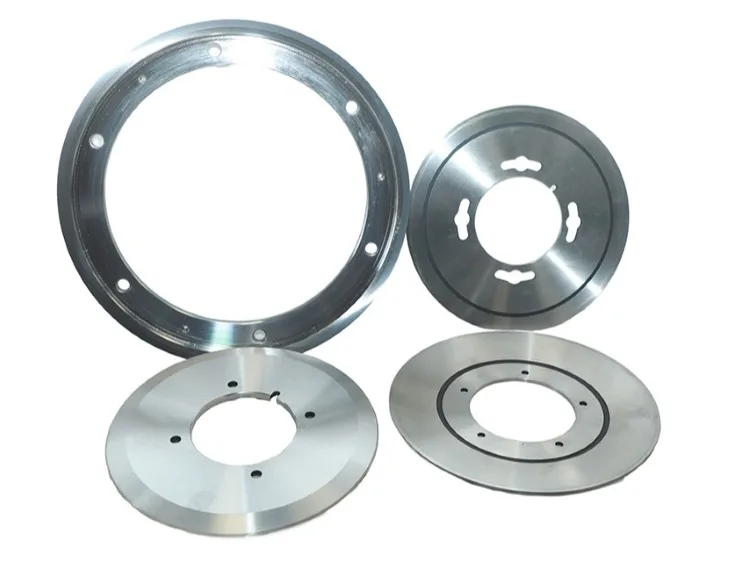
[ Knowledge Base ]
Product FAQs & Buying Guidance
Technical FAQs
01How is a multi-groove bottom knife different from a grooved anvil knife?
+−
How is a multi-groove bottom knife different from a grooved anvil knife?
Scale and purpose. A grooved anvil knife is a disc carrying one to three grooves, ground to an OEM shear-pair profile and used mainly on film, foil and tape lines — see our bottom grooved anvil knives page for that product. A multi-groove ring is a much wider body carrying many parallel grooves, and its point is that a single ring covers many slit positions so width changes do not require re-tooling. If you change width often, you want the ring; if you run one width against a specified OEM anvil profile, you want the anvil.
02What groove pitch can you actually grind, and how do I specify it?
+−
What groove pitch can you actually grind, and how do I specify it?
Cutting edge division — the distance from one cutting edge to the next — is custom in nearly every case and can go as narrow as 5 mm (0.200 in). Do not specify it as a single number: send the list of slit widths you actually run and we will lay out the groove positions so your common widths all land on a groove. That is the difference between a ring that covers your schedule and one that covers half of it and forces a spacer stack for the rest.
03Should I order plain bore or set screw?
+−
Should I order plain bore or set screw?
It follows your bottom shaft, not your preference. A plain bore clamps onto an expandable air shaft and is the fast-change option found on most modern converting lines. A set-screw design fixes onto a solid bottom shaft and is common on older machines and heavy board lines. The two are not interchangeable — the bore specification differs — so a ring bored for the wrong system will not seat true and will read as runout at the slit. If you are unsure, photograph the shaft end with the existing rings on it.
04My slit widths have started drifting across the shaft. Is the ring the problem?
+−
My slit widths have started drifting across the shaft. Is the ring the problem?
Check runout and the ring stack before the grooves. Groove positions are ground in one setup and do not move, so a ring that was accurate on installation is rarely the source of progressive width drift. The usual causes are a bore seating on a worn or contaminated shaft, or rings from different suppliers mixed on one shaft with slightly different bore and face specifications, which stacks a small wobble into a measurable width error. Worn groove edges show as a deteriorating cut edge and rising dust, not as width drift.
Why Choose Sureay
01What do you need in order to quote?
+−
What do you need in order to quote?
Outer diameter, bore, ring width, groove count and pitch, the shaft type (expandable air shaft or solid shaft), the mating top knife specification, and the substrate and line speed. The single most useful extra is your list of running widths — it lets us lay out groove positions against your real schedule instead of copying a pitch. A drawing or a worn ring shortens the quote further; we reverse-engineer from samples as routine work.
02Do you supply single-groove and smooth rings as well, or only multi-groove?
+−
Do you supply single-groove and smooth rings as well, or only multi-groove?
All three, and we recommend buying them together. Single-groove cutter rings cover fixed positions and smooth rings act as spacers and web supports between cutting positions. Because they are made to the same bore and runout specification they stack without introducing wobble — mixing rings from different suppliers on one shaft is a common and genuinely hard-to-diagnose source of slit-width variation.
03Can these be reground, and how many times?
+−
Can these be reground, and how many times?
Yes, and regrinding is central to the economics because a ring is a large body to scrap. How many cycles you get depends on groove depth and how much material each regrind takes; tool-steel rings typically give several cycles before groove geometry can no longer be restored. We regrind rings we manufactured and, in most cases, rings we did not, provided the body is true and the bore is undamaged — and we will tell you plainly when a ring is not worth the work.
Reach Our Team
Get in Touch with Our Engineers
Contact Our Team
Discuss your requirements directly with our engineers.
Request a Quote
Our engineering team responds within 2 hours.