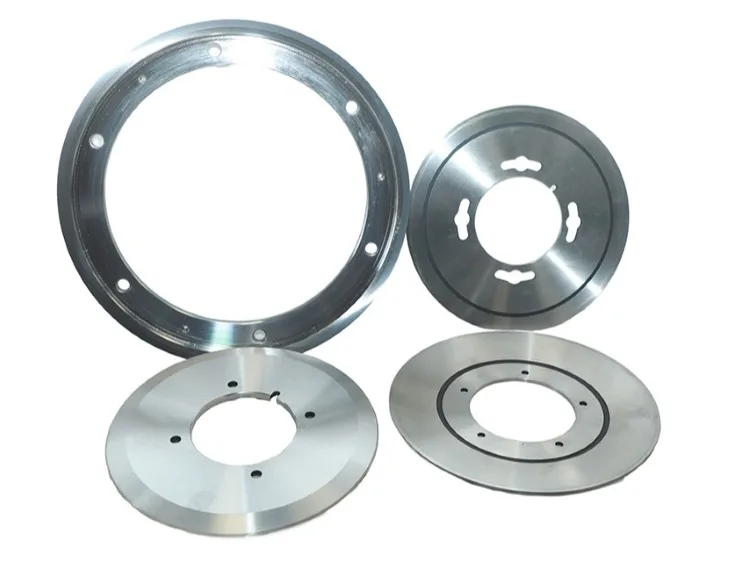
Carbide Slitter Rewinder Bottom Knives for Paper & Film Rewinding Lines
Slitter Knives
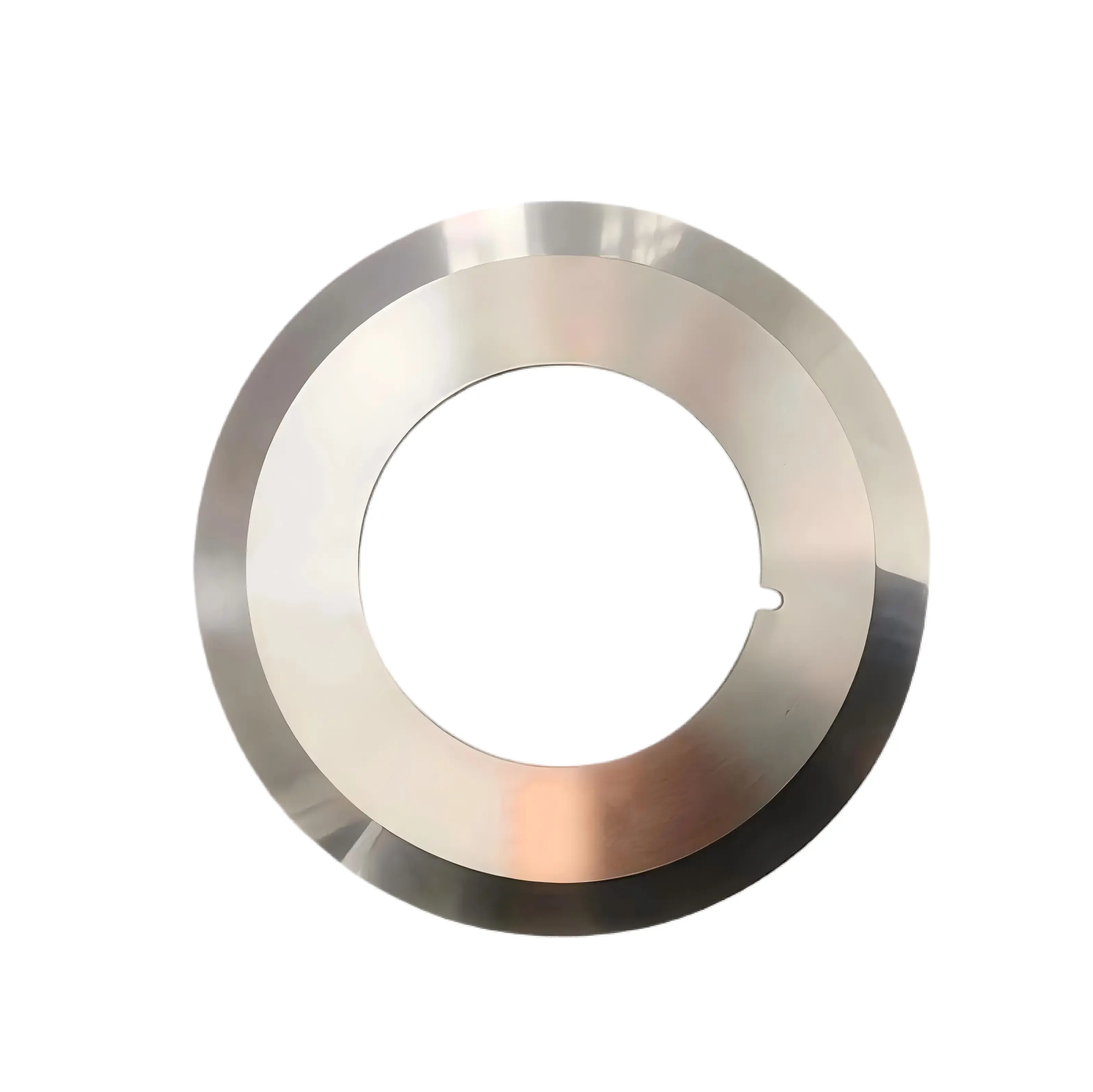
These are circular bottom knives that run as a shear pair with a top knife on rewinding lines. If you need flat anvils for crush cutting instead, see Bottom Grooved Anvil Knives.
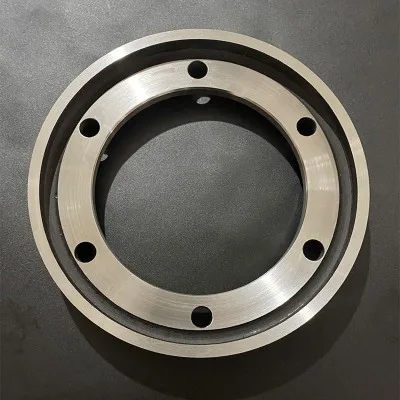
Solid and carbide-tipped bottom knives for high-speed paper slitter rewinders. Mirror-finished faces, burr-free cutting and reduced dust in the wound roll. Φ250–Φ254 stock sizes in thicknesses from 15 to 50 mm, custom bores to machine. Fits Beck, Bielomatik, Jagenberg, ECH Will, Maxson, Masson Scott, Pasaban and other electric rewinder platforms.
- ■Material: Solid tungsten carbide / carbide-tipped / HSS
■ ISO 9001:2015 Certified
■ In-House Heat Treatment
■ Strict Dimensional Tolerances
■ Global Door-to-Door Delivery
[ Engineering Reference ]
Decisive Specifications
| Material | Solid tungsten carbide / carbide-tipped / HSS |
|---|---|
| Outer Diameter | Φ250–Φ254 mm standard |
| Thickness | 15 / 20 / 25 / 50 mm |
| Face Finish | Mirror finished |
| Design Principle | Bottom knife harder than the top knife — burr and dust control |
| Materials Slit | Paper, film, foil and similar web substrates |
■ All values verified via CMM inspection · ISO 9001:2015
[ RFQ Prompt ]
Need a Specific Size or OEM Replacement?
Don't see your exact specs? Send us a blueprint, a worn sample, or just your machine model. Our team will review the details and provide a tailored quotation.
[ Material Selection ]
Which Steel Grade Should You Order?
The bottom knife should always be the harder half of the pair. Within that rule, the grade is chosen on how abrasive the substrate is and on whether you want a re-tippable body.
| Grade | Hardness | Best For | Trade-off |
|---|---|---|---|
| Solid tungsten carbide | HRA 89–91 | Abrasive and heavily coated stocks; the longest interval between changes | Highest unit price, and the whole knife is scrapped when the edge is spent |
| Carbide-tipped | HRA 89–91 at the tip | General paper and board — the best cost-to-life balance, and re-tippable | Braze quality decides service life; poorly set inserts loosen at speed |
| HSS | 62–64 HRC | Short runs, soft uncoated stocks, lowest unit cost | Edge rounds quickly at rewinder speeds, which is where dust in the roll begins |
Whichever grade you choose, keep the hardness differential with the top knife. Matching the two hardnesses is a common and expensive mistake — it removes the shear and leaves you crushing the web.
[ Standard Reference ]
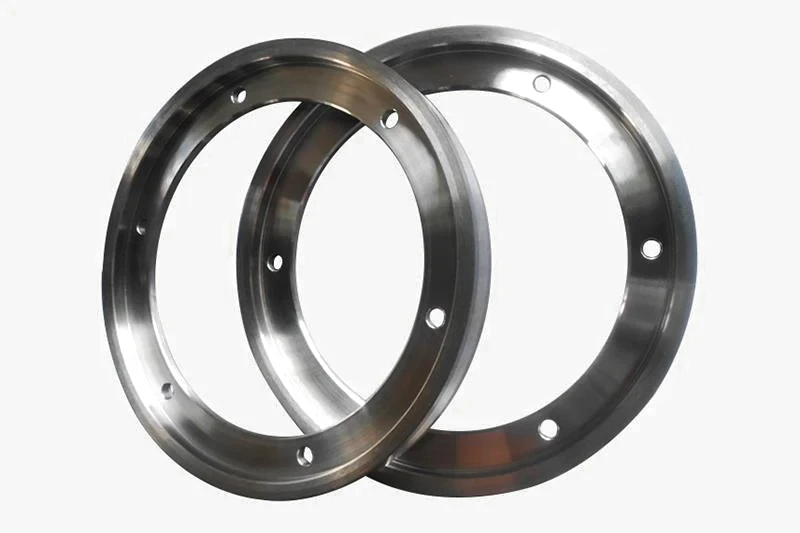
Common Standard Dimensions
| Item | OD ØD (mm) | Bore Ød (mm) | Thickness T (mm) |
|---|---|---|---|
| 1 | Φ250 | Φ188 | 25 |
| 2 | Φ254 | Φ195 | 50 |
| 3 | Φ250 | Φ188 | 15 |
| 4 | Φ250 | Φ140 | 20 |
[ OEM Compatibility ]
Compatible Machine Brands
® Registered trademarks are property of their respective owners. Sureay supplies compatible replacement blades — not OEM-branded parts.
[ Technical Audit ]
Engineering Advantages
Deliberately Harder Than the Top Knife
The bottom knife is specified harder than its mating top knife on purpose. That differential is what keeps the pair shearing rather than deforming the web, and it is the direct cause of burr-free slit edges and low dust carry-over into the wound roll.
Mirror-Finished Running Face
A polished face releases the web instead of dragging on it, which keeps the slit clean and reduces friction heat at the cut. Face finish is one of the first things to degrade in service and one of the last things operators check — a dulled face raises dust long before the edge itself is worn out.
Controlled Hot-Set Carbide Inserts
On the tipped construction, inserts are hot-set under controlled conditions so they stay firmly bonded under high-speed running. The practical payoff is a re-tippable body: worn inserts are replaced and the knife returns to service rather than being scrapped.
[ System Inventory ]
Related Blade Categories
View All →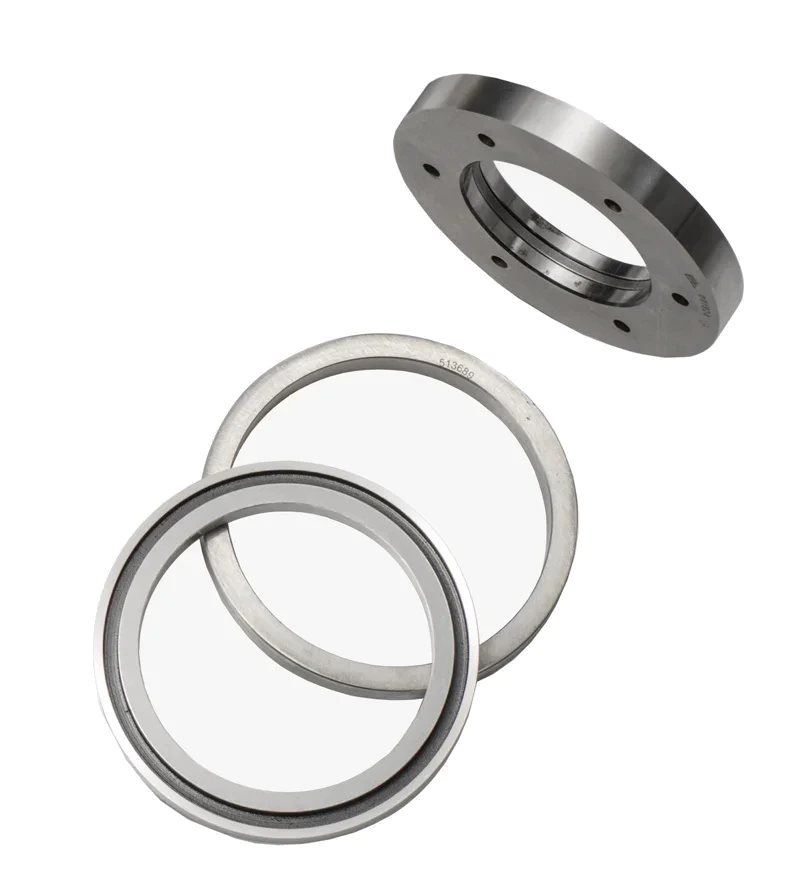
[ Knowledge Base ]
Product FAQs & Buying Guidance
Technical FAQs
01Why should the bottom knife be harder than the top knife?
+−
Why should the bottom knife be harder than the top knife?
Because a shear cut needs a hardness differential to stay a shear cut. When the two knives are close in hardness, the material in the shear zone deforms instead of separating cleanly, and you get a burred slit edge and crushed fibre that becomes dust in the roll. The harder bottom knife holds a stable edge geometry while the softer top knife carries the wear — which is also why the top knife is the one you expect to change more often. Matching the hardnesses is a common and expensive mistake.
02I am getting dust in the wound roll. Where should I look first?
+−
I am getting dust in the wound roll. Where should I look first?
At the slit itself, before the web cleaners and static bars. A bottom knife whose edge has rounded or whose face finish has dulled stops shearing and starts crushing, and crushed fibre goes straight into the roll — often showing up as a defect two processes later. The tell is timing: dust that appeared gradually points at the knife, dust that appeared after a grade change points at the substrate. Inspect the edge under magnification and check the face finish, not just sharpness by feel.
03Can I order bottom knives without replacing the top knives?
+−
Can I order bottom knives without replacing the top knives?
Yes, and it is the normal way these are bought. Bottom knives typically outlast top knives by a wide margin, so replacing them on the same cycle wastes serviceable tooling. Give us the bottom knife OD/ID/thickness and the matching top knife specification, and we will match the mating geometry and the hardness differential to what you already run.
04Can worn carbide-tipped knives be re-tipped?
+−
Can worn carbide-tipped knives be re-tipped?
Yes, provided the body is straight and true and the braze seats are sound. Re-tipping is substantially cheaper than a new knife and is the reason to choose tipped over solid carbide when the economics are close. Solid carbide cannot be re-tipped — when the edge is spent the knife is spent, which is the trade you accept for the longest single service life.
Why Choose Sureay
01What do you need to quote a bottom knife?
+−
What do you need to quote a bottom knife?
OD, bore and thickness of the knife you run now, the matching top knife specification, what you are slitting, line speed and the number of slits. If any of that is unknown, send the worn knife or photographs with a caliper in frame — we would rather reverse-engineer from a sample than quote against an assumption.
02Do you supply for rewinder brands outside the list on this page?
+−
Do you supply for rewinder brands outside the list on this page?
Yes. The listed platforms are the ones we see most often, not a limit — bottom knives are made to the machine in every case. Any electric slitter rewinder is in scope once we have the mounting dimensions and the mating top knife specification.
03How are these packed?
+−
How are these packed?
Individually, with the edge protected and VCI paper against corrosion, in a fitted crate for the larger diameters. Bottom knives that arrive with a nicked edge are useless regardless of how they were made, so the packing is specified for the transit rather than for the shelf.
Reach Our Team
Get in Touch with Our Engineers
Contact Our Team
Discuss your requirements directly with our engineers.
Request a Quote
Our engineering team responds within 2 hours.