
Special-Shaped Industrial Blades Made to Drawing
For drawing submission and the manufacturing process, see Custom Industrial Blades.
- ■Sizes: Made to Drawing
- ■Material: D2, H13, PM-HSS or carbide
- ■Application: Machine knives with a part-specific outline or edge profile
Decisive Specifications
Manufacturing includes in-house heat treatment and CMM inspection under ISO 9001:2015 quality control.
| Application | Machine knives with a part-specific outline or edge profile |
|---|---|
| Material | D2, H13, PM-HSS or carbide |
| Sizes | Made to Drawing |
| Dimensional Tolerance | ±0.02 mm |
What to Include in Your Quote Request
Include the machine and material, drawing revision, blade outline, mounting dimensions and critical edge or tolerance requirements.
Engineering Advantages
Part-Specific Cutting Profiles
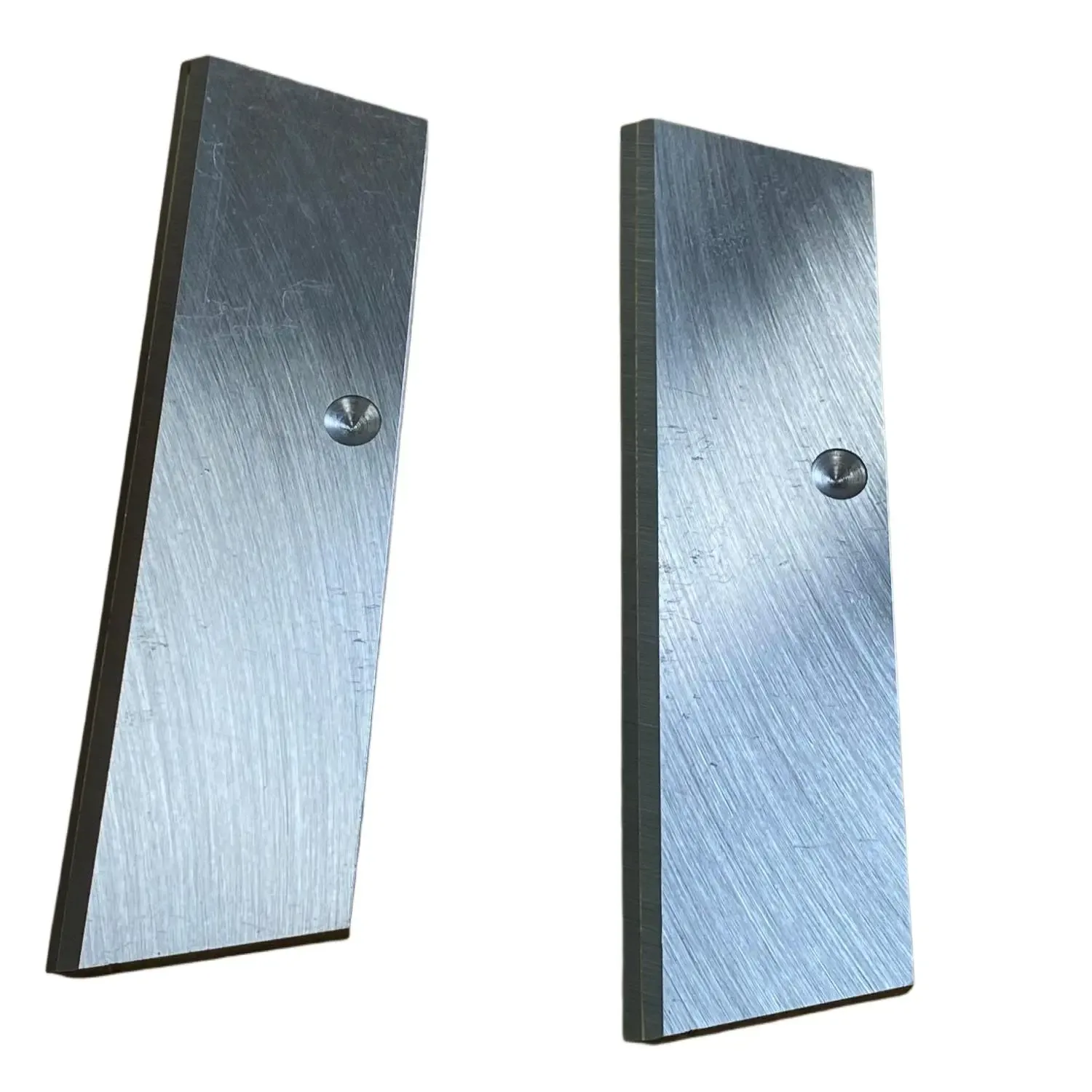
Sureay makes industrial blades with custom outlines, bevels and working-edge positions, giving you a replacement route for knife profiles outside standard straight or circular configurations.
Tool-Steel, PM-HSS and Carbide Options
D2, H13, PM-HSS and carbide configurations allow the cutting material to be specified around your existing blade design and the material being processed.
Drawing-Based Mounting and Handed Profiles
Sureay makes custom holes, slots and seating faces to your mounting datums. Specify the edge-to-seat distance, cutting direction and any left- or right-hand differences so the replacement preserves the original working position.
Related Blades & Parts
View All →

Technical FAQs
01What is a special-shaped industrial blade?
+−
What is a special-shaped industrial blade?
It is a machine knife whose outline, edge profile or mounting arrangement needs a part-specific drawing. Custom-profile knife and specialty blade are related purchasing names. The cutting task and installed position establish the actual geometry, including features that cannot be identified by overall length, width and thickness alone.
02Which dimensions determine fit on a special-profile knife?
+−
Which dimensions determine fit on a special-profile knife?
The edge position relative to the mounting datums is particularly important. Define the outline, thickness, holes, slots, recesses and bevel, then identify which dimensions control location and clamping. This connects the cutting profile to the installed position rather than relying on overall dimensions alone.
03How should left-hand and right-hand knives be identified?
+−
How should left-hand and right-hand knives be identified?
Use a defined drawing view and show the installed orientation and cutting direction. Include both faces where the bevel, countersink or mounting recess changes sides. A mirrored outline may preserve overall dimensions while moving a critical feature, so each required hand should have an unambiguous part reference.
04Can the material be changed while keeping the existing profile?
+−
Can the material be changed while keeping the existing profile?
Yes, a new material can be considered while retaining the required profile. Choose the candidate grade using the stock being cut, wear on the current knife and support at the edge. Treat it as a revised material specification and retain the required cutting and mounting geometry.
05Can a special-shaped blade be resharpened?
+−
Can a special-shaped blade be resharpened?
Yes, if grinding can restore the specified cutting profile without moving the edge beyond the drawing limits. Reference the same hole, shoulder or seating face when measuring the reground edge. Replace the knife if the edge can no longer be restored within those limits.
06What should I send for a custom-profile industrial blade quote?
+−
What should I send for a custom-profile industrial blade quote?
Send the machine or cutting station, material being cut, approved part drawing and quantity. Mark the cutting direction, mounting datums and toleranced edge-to-seat dimensions, including each handed profile. If you only have a sample, show the mating component or an unused reference and mark the worn areas.
Get in Touch with Our Engineers
Contact Our Team
Discuss your requirements directly with our engineers.